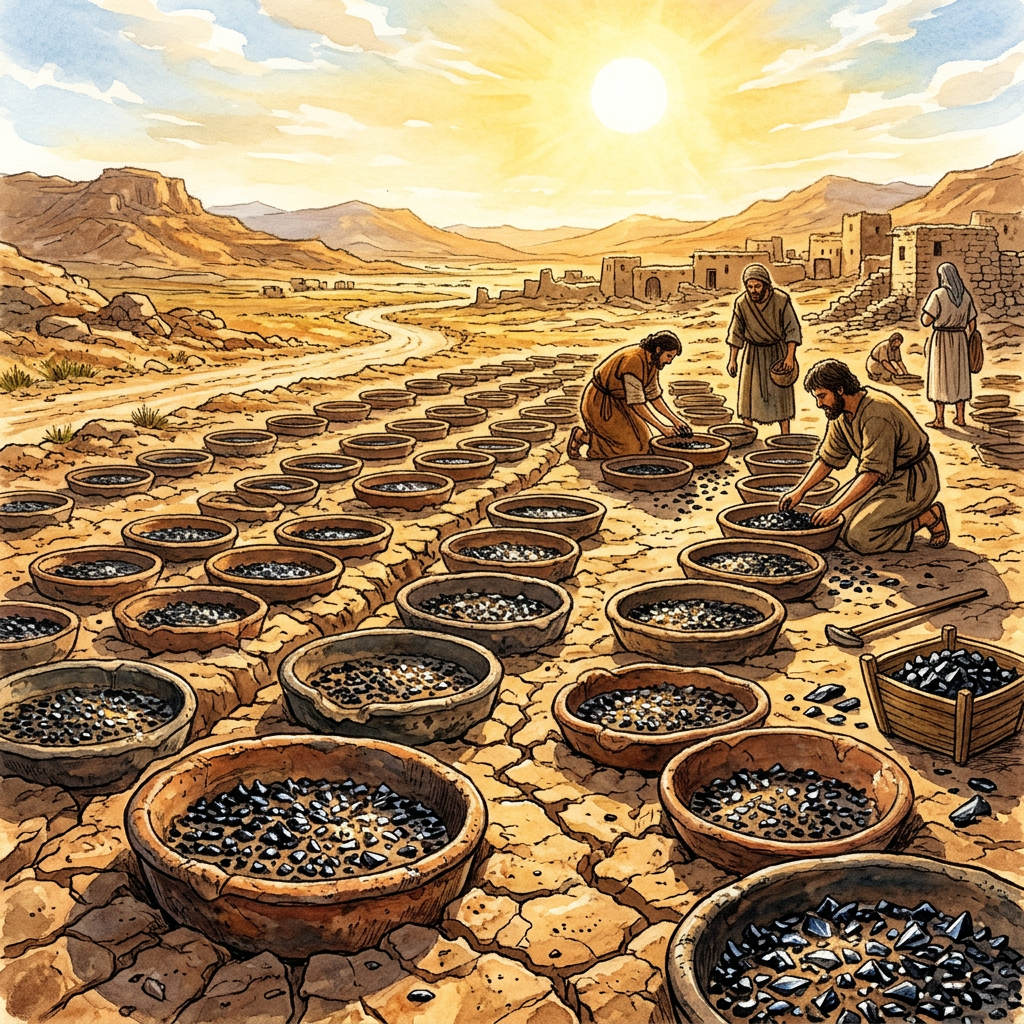
Archaeologists excavating the ancient lakebeds of the Valley of Mexico have uncovered a massive complex of obsidian-studded ceramic salt-pans. These artifacts, dating back to approximately 500 CE, suggest that salt production was not merely an industry but a highly ritualized endeavor tied to the Festival of the White Brine, a precursor to later Aztec ceremonies honoring the goddess Uixtocihuatl.
The excavation team from the National Institute of Anthropology and History found that the pans were arranged in a celestial pattern, with each vessel bearing microscopic traces of ceremonial pigments. This discovery provides the first physical evidence of a multi-day communal gathering where the extraction of salt was punctuated by rhythmic dances and offerings of carved volcanic glass, intended to ensure the continued salinity and purity of the lake's resources.