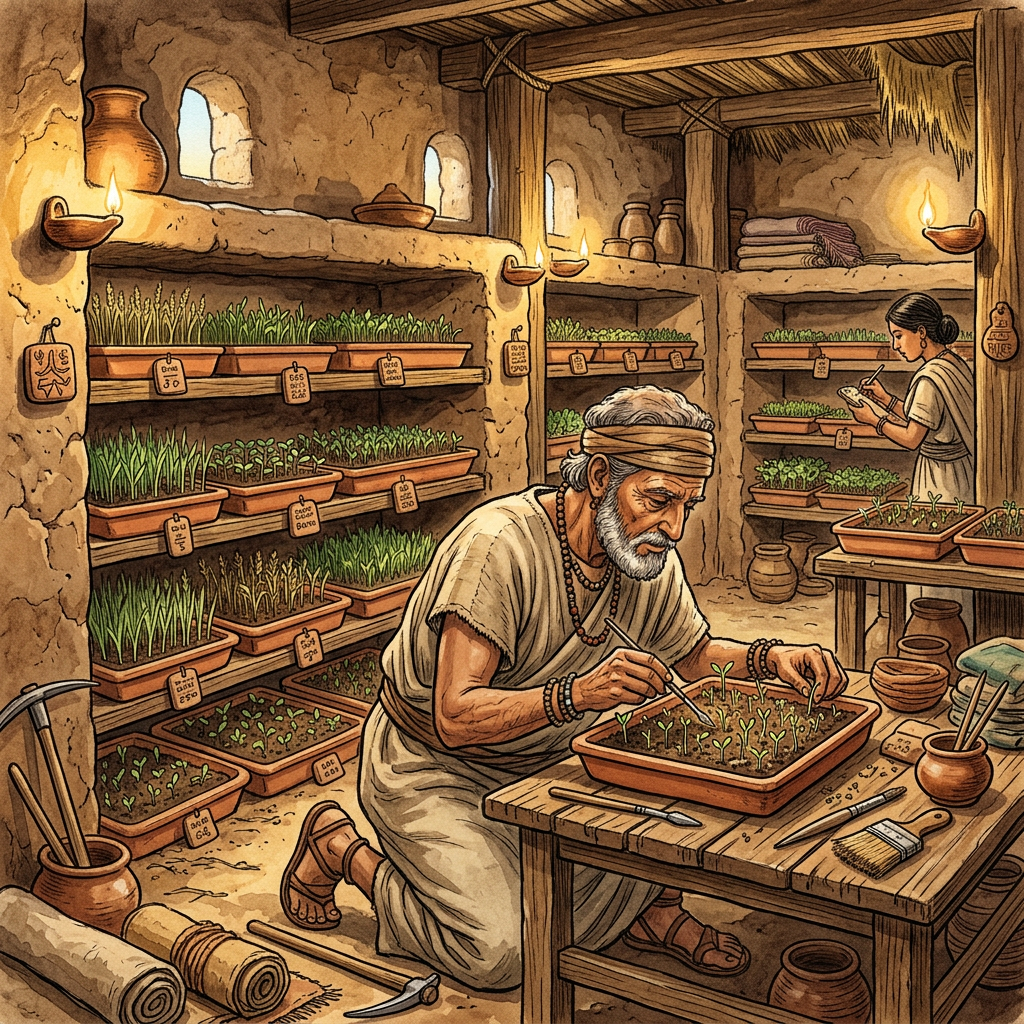
Archaeologists working in the Ghaggar-Hakra river basin have unearthed what is believed to be the first evidence of a centralized horticultural research facility belonging to the Mature Harappan period. The site, located in Rajasthan, features a series of specialized climate-controlled mud-brick rooms designed for experimental crop cultivation and the adaptation of plant species to the arid local environment.
Excavations revealed dozens of intact terracotta germination trays, some still containing traces of carbonized seeds from non-native flora. Researchers suggest this facility was instrumental in the Indus Valley’s agricultural resilience, allowing the civilization to develop drought-resistant crop varieties that supported their massive urban populations during periods of climate shift.