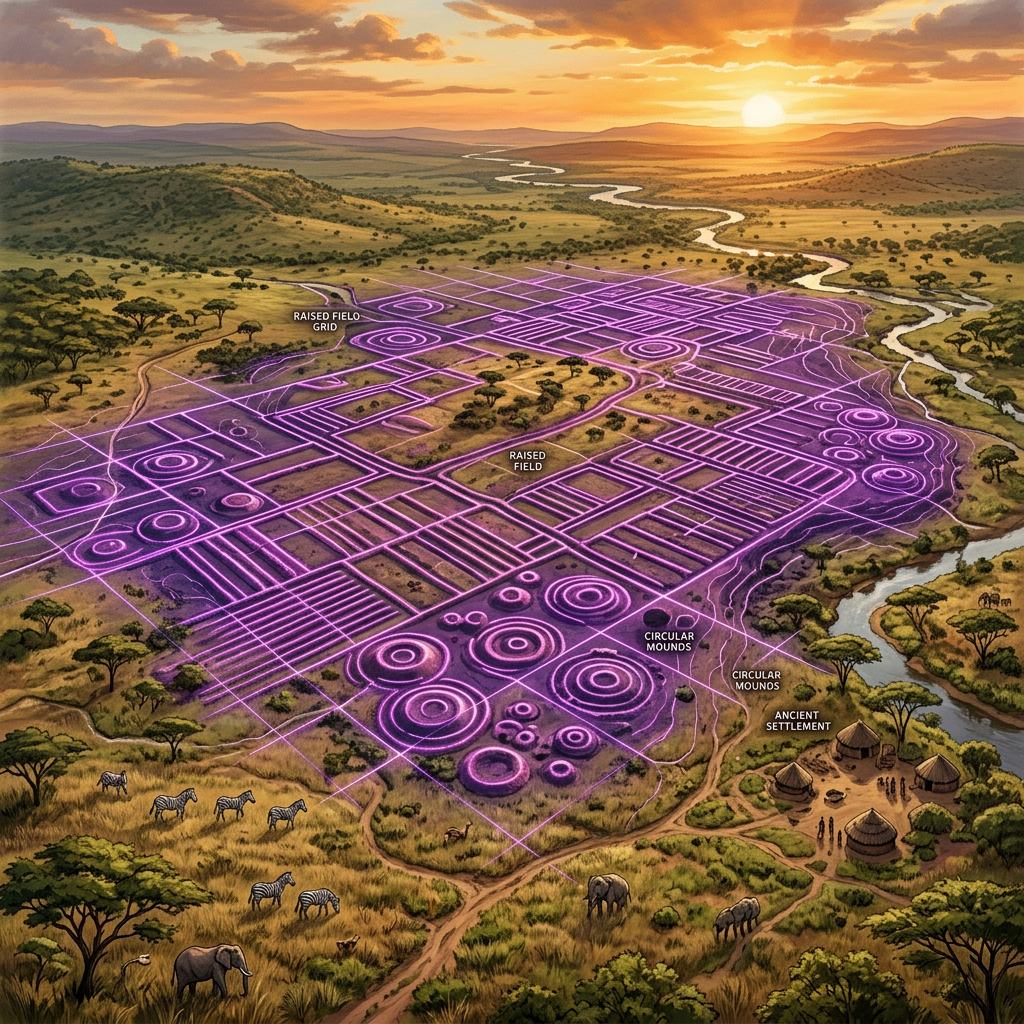
Archaeologists utilizing high-resolution LiDAR (Light Detection and Ranging) have identified the sprawling remains of a previously unknown urban center in the Kafue Flats of central Zambia. The site, dating to approximately 500 CE, features an extensive network of raised-field agriculture and interconnected mound habitations that suggest a highly organized society capable of managing complex seasonal flooding.
The discovery challenges previous assumptions about the density of pre-colonial settlements in the Zambian interior. The mapping reveals over 200 distinct platform structures, ceremonial plazas, and what appear to be large-scale grain storage facilities, indicating that this 'metropolis' served as a regional hub for trade and food production long before the rise of later southern African kingdoms.