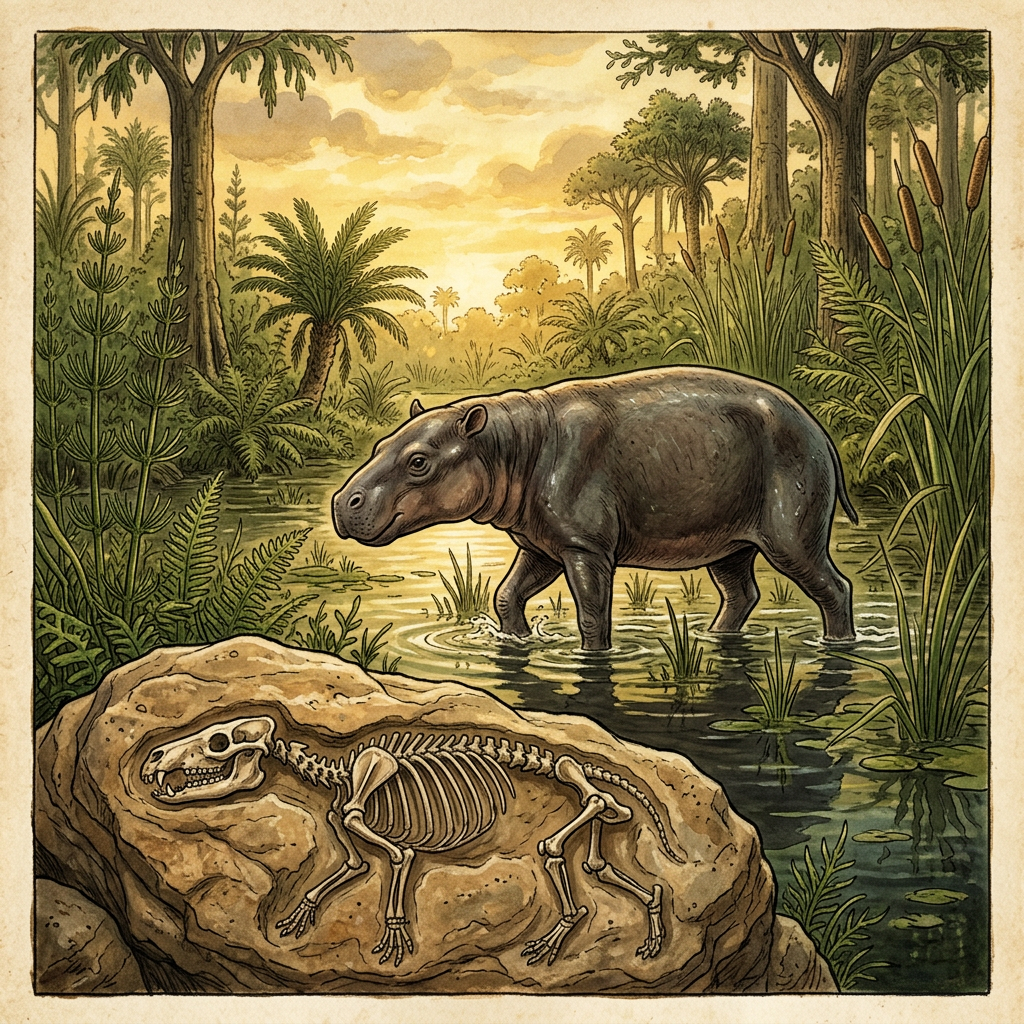
Palaeontologists working in the rugged Sulaiman Range of Pakistan have unearthed the near-complete skeleton of a new species of primitive anthracothere. Standing only 40 centimeters tall, this 'miniature hippo' relative represents a critical transitional phase in the evolution of hippopotamuses and their semi-aquatic ancestors during the Eocene epoch.
Detailed analysis of the specimen, named Palaeopotamus parvus, reveals specialized limb bone density and tooth morphology adapted for a diet of aquatic vegetation. This finding provides essential data on how early ungulates adapted to the riverine environments of the ancient Tethys Sea, bridging the morphological gap between terrestrial ancestors and modern river-dwelling giants.