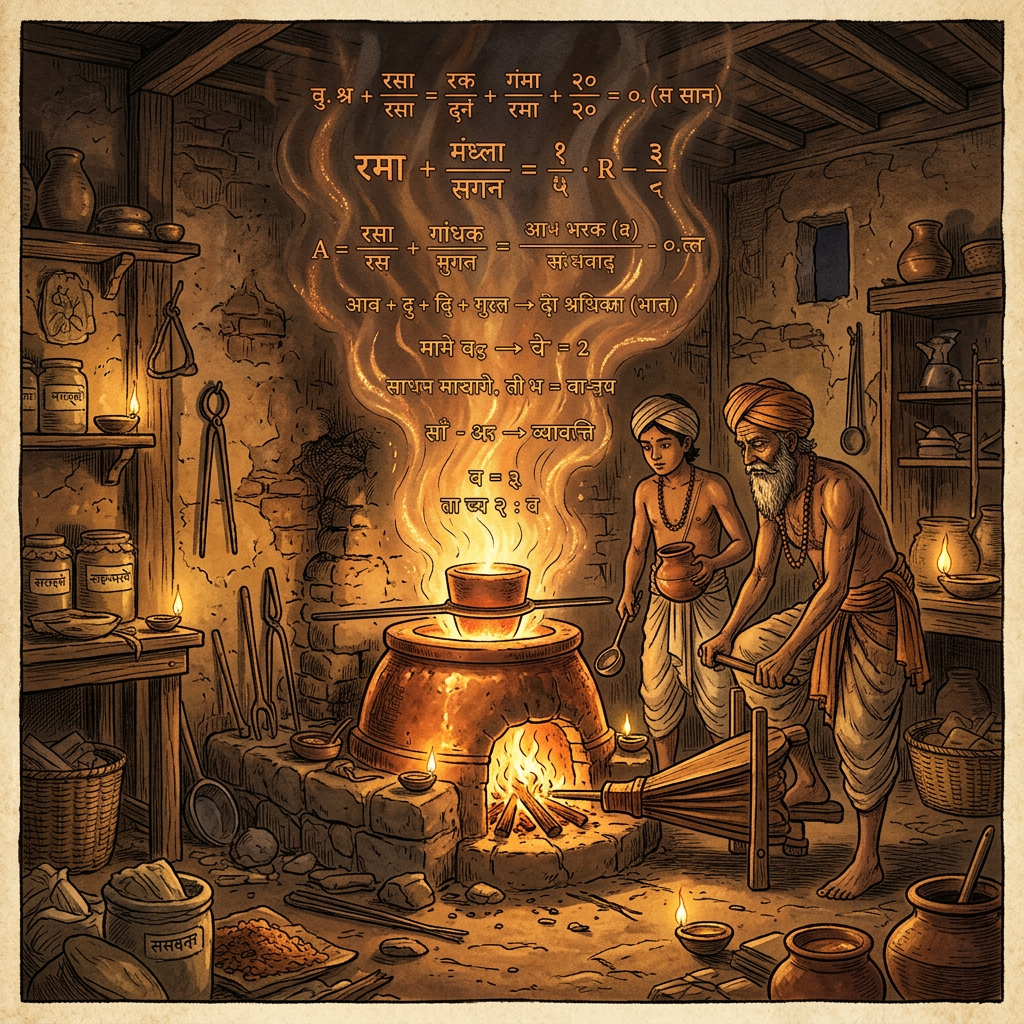
Researchers specializing in ancient Indian material science have completed a computational analysis of 10th-century Shilpa-Ratna manuscripts, identifying recursive algorithmic protocols for the synthesis of high-strength sacred alloys. The study, appearing in Acta Archaeologica, explains how ancient metallurgists calculated the precise ratios of minor metallic additives to optimize the elastic modulus and vibrational resonance of ritual bells and architectural pillars.
By modeling the descriptions through modern thermodynamic simulations, the team confirmed that the described 'Pancha-Loha' (five-metal) formulations achieved a structural integrity comparable to modern industrial bronzes. This research validates the mathematical precision of medieval Indian craftsmanship, demonstrating a rigorous theoretical understanding of metallurgical fatigue and stress distribution.