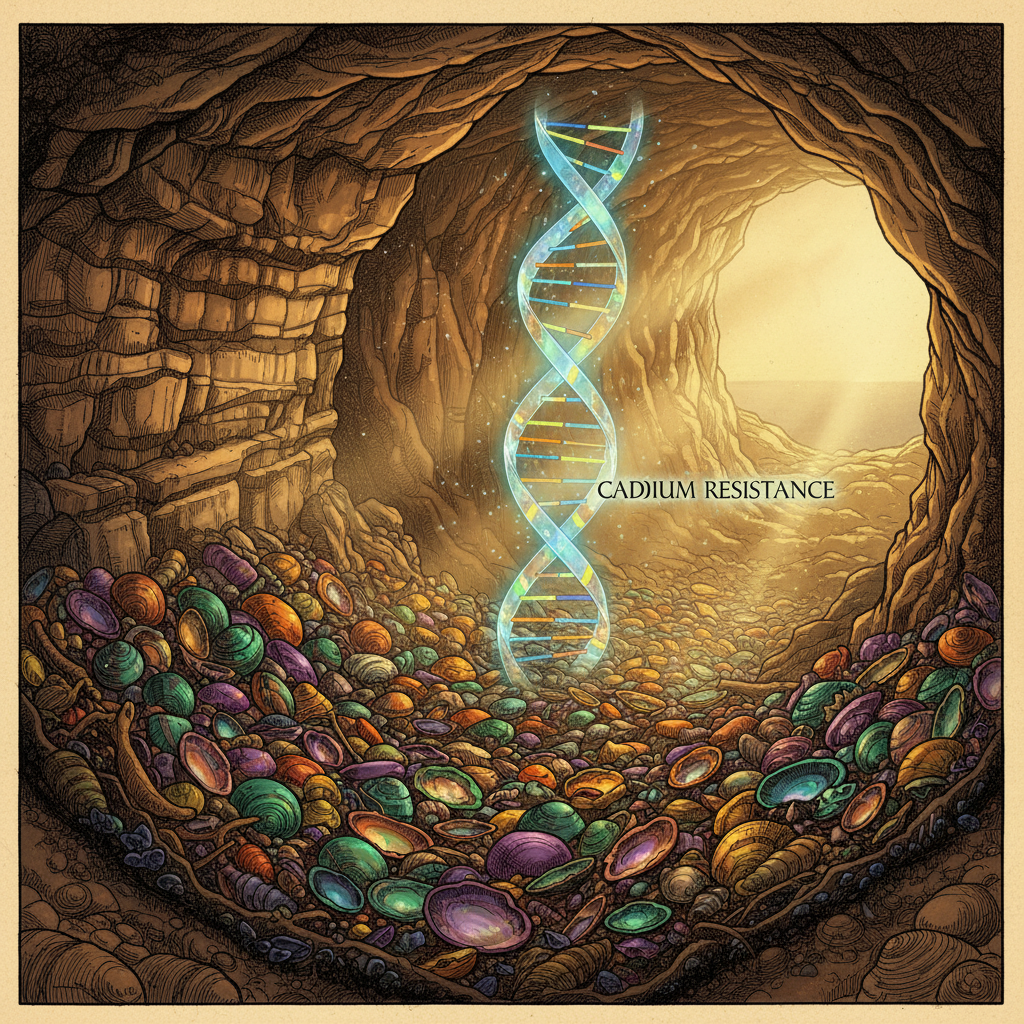
A paleogenomic breakthrough published in Cell Research has mapped the genetic history of post-glacial hunter-gatherers on the submerged Sunda Shelf. Analysis of 12,000-year-old remains identifies a distinctive evolutionary selection for metallothionein gene variants, which provided specialized protection against high levels of dietary cadmium found in endemic marine gastropods.
This adaptation allowed early maritime foragers to utilize heavy-metal-rich shellfish as a primary protein source without the toxic effects of chronic accumulation. The study suggests that the rapid rise in sea levels following the last glacial maximum forced localized populations into niche dietary environments, triggering some of the earliest known examples of human genetic adaptation to specific heavy-metal dietary stressors.