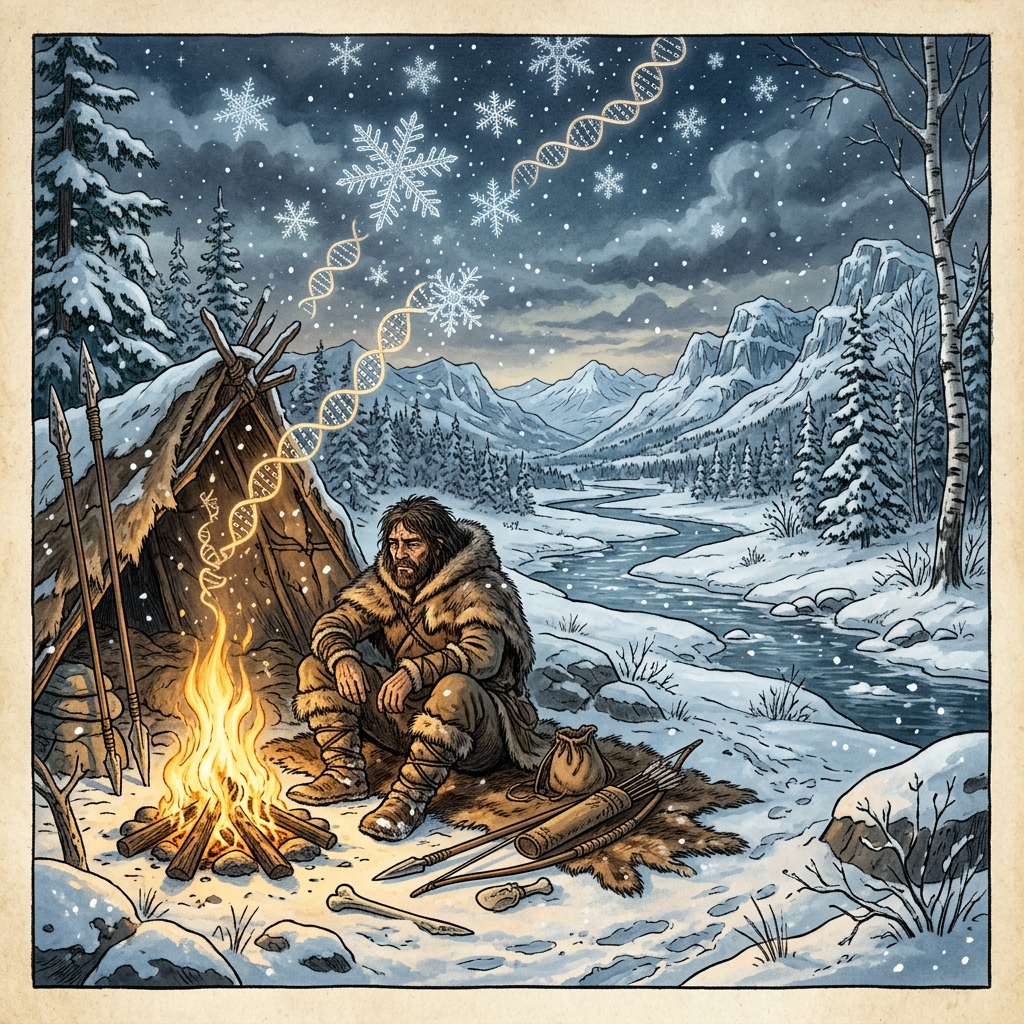
New genomic research published in Nature Anthropology has unveiled a previously unknown genetic divergence among Late Pleistocene hunter-gatherers in the Danube Basin. The study of 14,000-year-old skeletal remains identified specific alleles within the TRPV1 gene cluster that provided enhanced resilience to cold-induced vascular spasms, a critical evolutionary adaptation for survival during the post-glacial cooling periods.
This genetic signature suggests that these early European populations underwent rapid selection for peripheral blood-flow regulation, distinct from the metabolic adaptations observed in contemporary Arctic lineages. The findings provide new insights into the physiological diversity of Pleistocene humans and the localized nature of human evolutionary responses to extreme climatic shifts in the Balkan corridor.