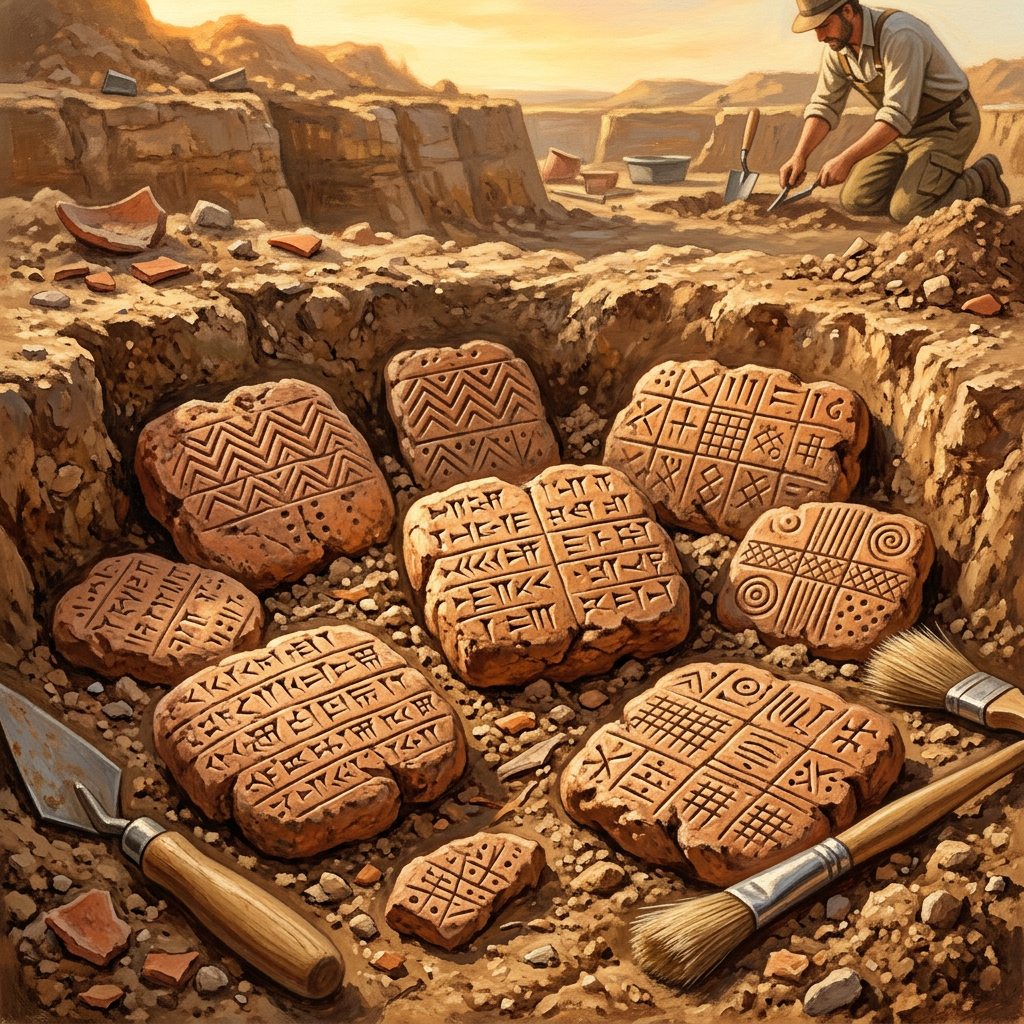
Excavations at a newly identified site in the Ghaggar-Hakra river basin have yielded a cache of terracotta clay tablets containing the 'Satya-Nirodha', a philosophical dialogue regarding the ethics of silence. The tablets, which date back to approximately 450 BCE, argue that the highest form of truth (Satya) is found not in speech, but in the restraint of the phonetic impulse.
This discovery highlights a previously under-researched ascetic tradition within early Sanatan Dharma that prioritized internal cognitive stillness over external ritual or verbal exposition. Researchers believe the find provides critical context for the development of later silent meditation practices in both the Upanishadic and Buddhist traditions.