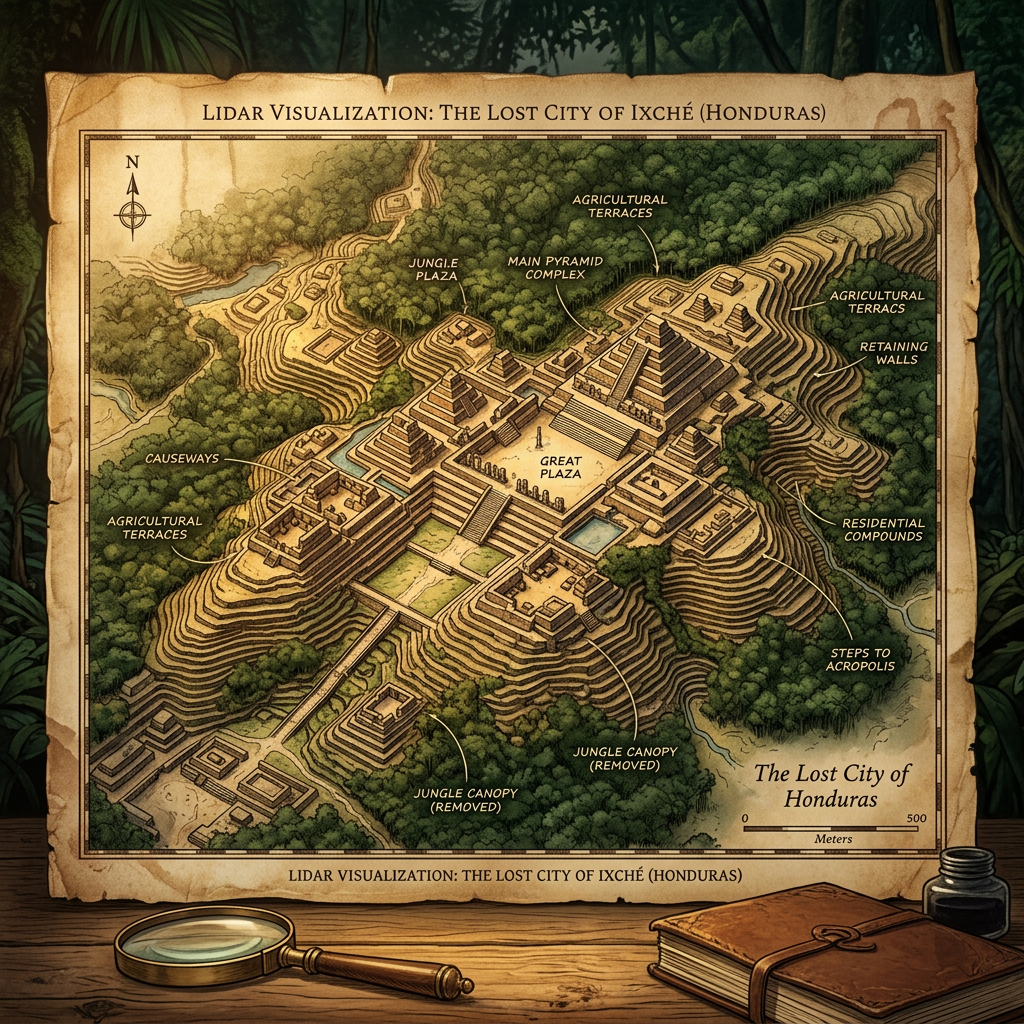
A groundbreaking LiDAR survey in the remote Petén Basin of Guatemala has identified a sprawling urban complex dedicated to the large-scale cultivation and processing of chili peppers. The site features thousands of terraced gravity-fed drying plazas and stone-lined storage vaults located on the slopes of the Maya Mountains.
Archaeologists believe this "Chili Megalopolis" served as a primary export hub for the Maya lowlands during the Late Classic period. The mapping reveals a sophisticated hydraulic network used to provide the specific moisture levels required for capsaicin-rich crops, illustrating the extreme degree of agricultural specialization achieved by the Maya before the 10th-century collapse.