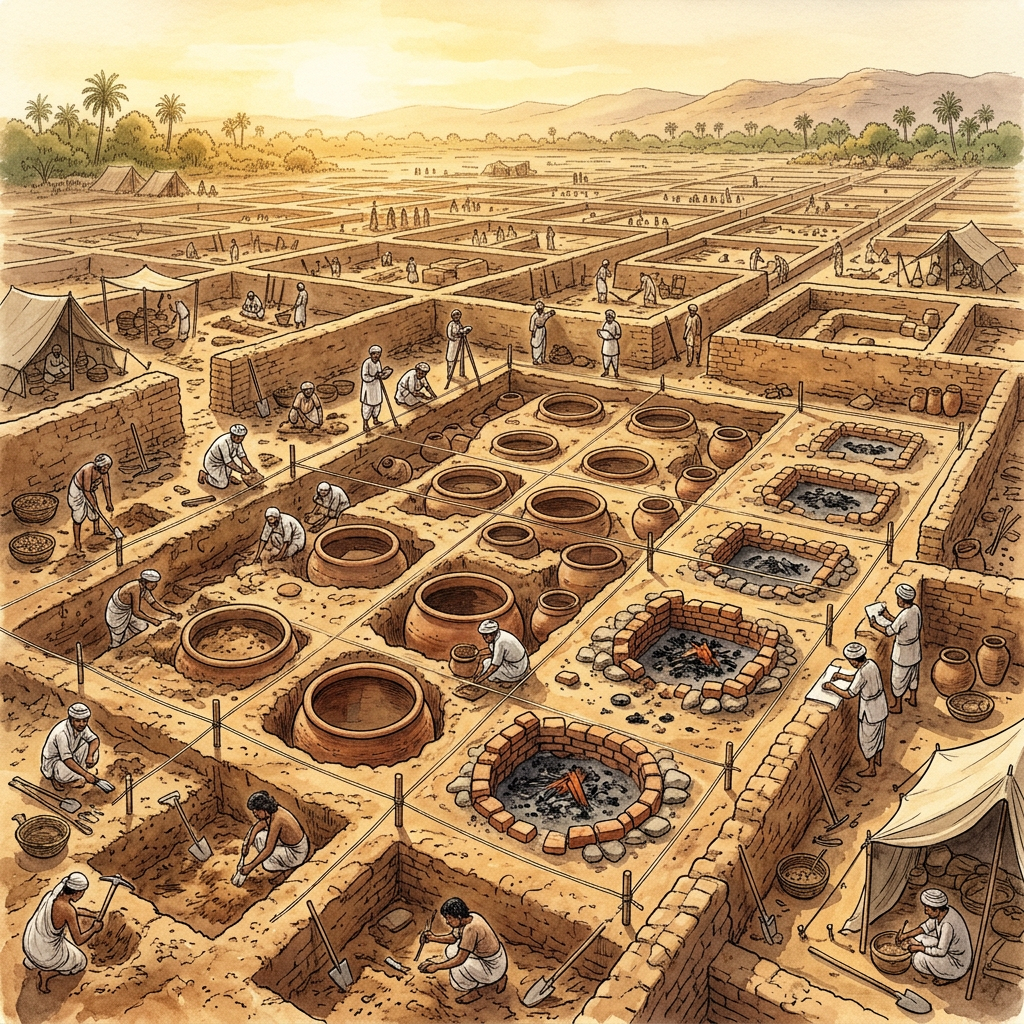
A recent excavation at a Mature Harappan site in Haryana’s Hisar district has revealed a specialized industrial wing dedicated to the production of mineral-based adhesives. Archaeologists uncovered a series of terracotta mixing vats containing residues of bitumen, resin, and powdered lime, used for waterproofing granaries and sealing maritime vessels.
This "adhesive laboratory" suggests that the Indus Valley Civilization possessed a sophisticated understanding of chemical bonding and material science. The presence of standardized heating pits indicates that adhesive production was a centralized urban industry, critical for the maintenance of the civilization's advanced hydraulic infrastructure and long-distance trade craft.