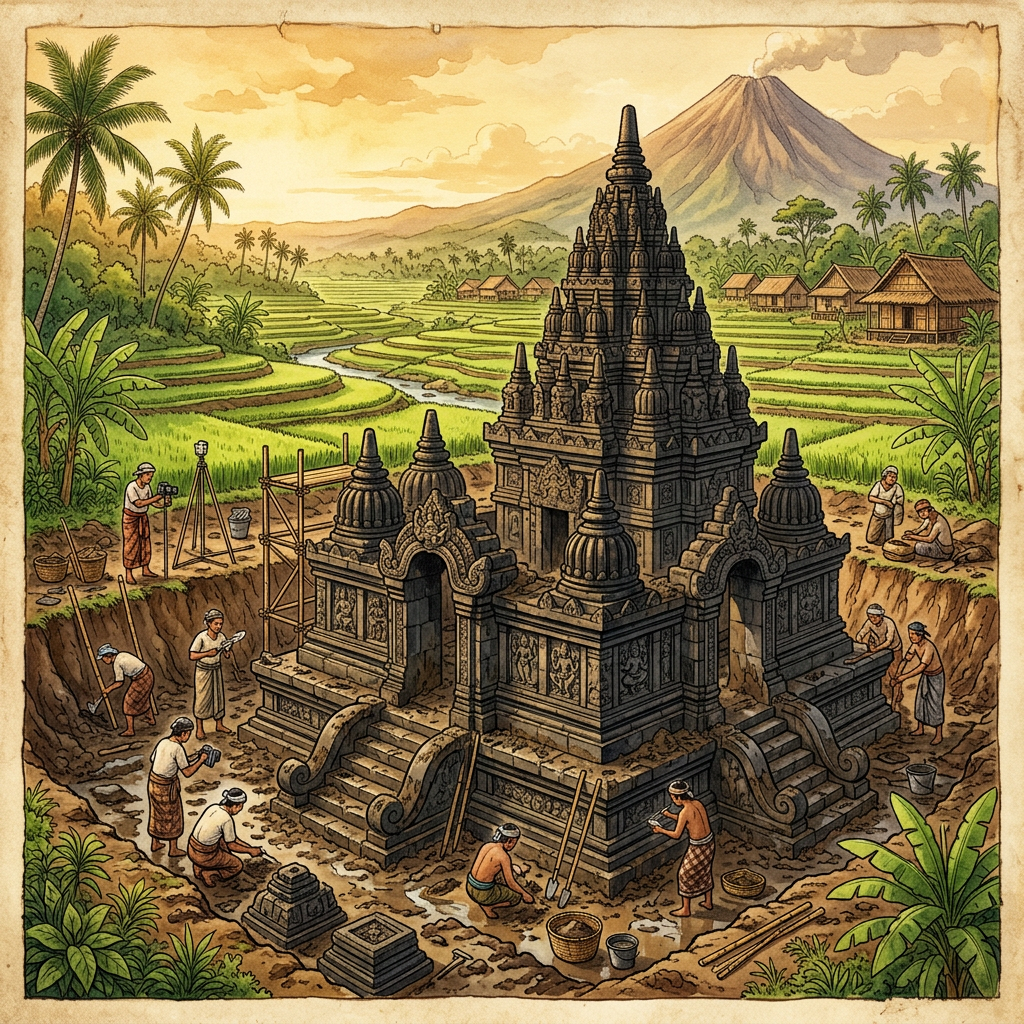
Archaeologists in Central Java have announced the discovery of a remarkably well-preserved Hindu temple complex dating back to the Early Mataram period. The site, located beneath three meters of volcanic soil and active rice paddies in the Klaten region, features a primary shrine dedicated to Shiva surrounded by four smaller ancillary structures.
Initial excavations have revealed intricate stone carvings and Vastu Shastra architectural alignments that suggest the temple served as a significant spiritual hub before being buried by a major eruption of Mount Merapi. The discovery provides crucial data on the spread of Hindu architecture in 8th-century Indonesia and the resilience of stone structures against volcanic activity.