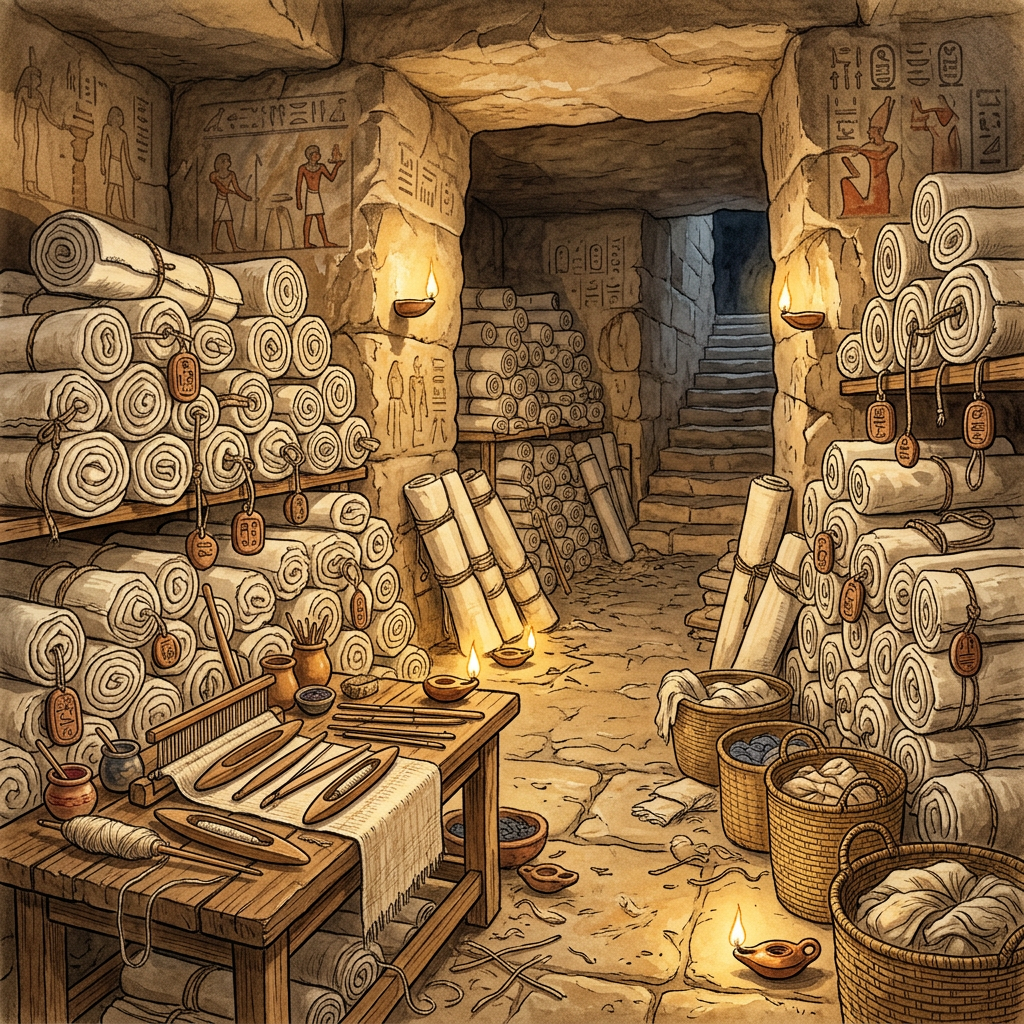
Archaeologists working at the Saqqara necropolis have unearthed a remarkably preserved "Royal Linen Treasury" dating back to the Fifth Dynasty. The chamber, located deep beneath a previously unexcavated mastaba, contains hundreds of bolts of finely woven linen, some still bearing the official seals of the royal weavers. This discovery is unprecedented because organic materials like textiles rarely survive in such pristine condition, offering a unique look into the industrial scale of ancient Egyptian garment production.
The facility appears to have functioned as both a storage unit and a quality-control center for the Pharaoh’s household. Preliminary analysis of the fibers suggests a level of thread-count and weaving sophistication that matches modern luxury linens. Researchers also found small wooden chests containing needles, loom weights, and natural dye samples, providing a complete picture of the textile-making process from raw flax to finished royal attire.