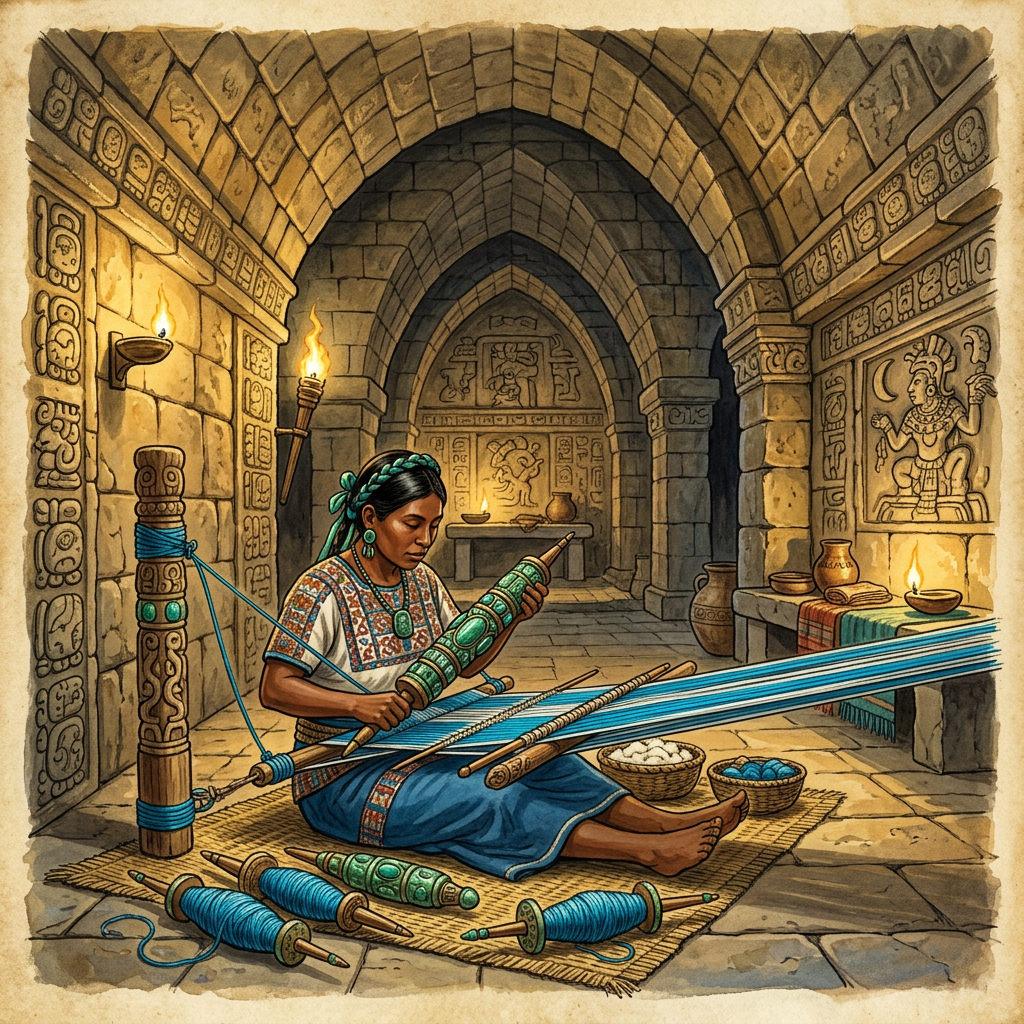
Deep within a vaulted chamber at a Maya site in the Puuc region of Mexico, archaeologists have discovered a set of jade-incrusted ritual spindles and bone weaving needles. Dated to the Late Classic period (600 AD), these artifacts were found alongside cerulean-dyed cotton fibers and ceramic figurines depicting women in elaborate ceremonial dress. Scholars interpret this as evidence for the Festival of the Rain-Thread, a ritual where the act of weaving was used as a metaphor for the creation of rain clouds.
The spindles are intricately decorated with images of the rain god Chaac, suggesting that weaving was considered a sacred act that could influence the arrival of the wet season. This discovery highlights the often-overlooked role of domestic labor and female-led rituals in Maya cultural heritage. The find provides a rich context for understanding the symbolic importance of textiles in ancient Mesoamerican festivals and their connection to environmental survival.