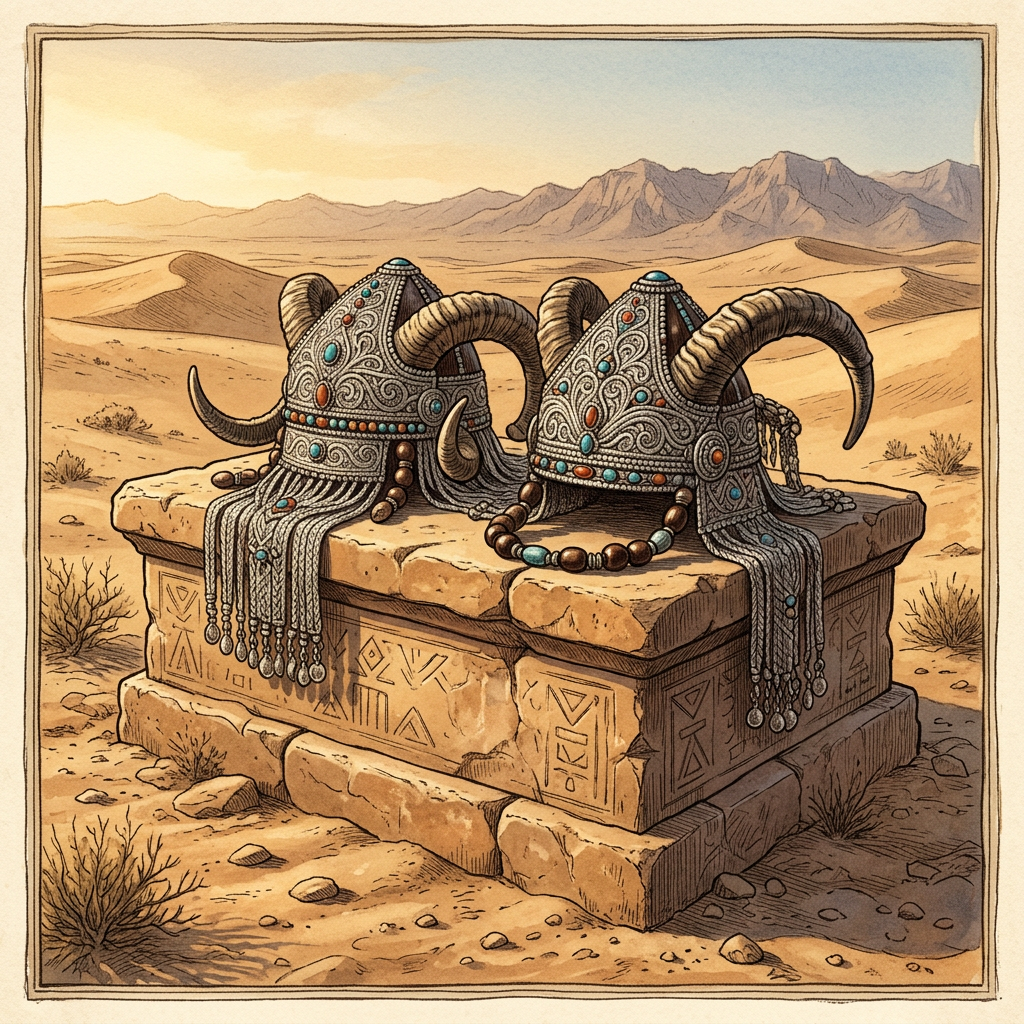
Excavations at a rural sanctuary in modern-day Algeria have revealed remarkably preserved fragments of silver-threaded ritual headdresses. Dated to the 2nd century BC, these textiles were woven with fine metallic wire and adorned with ostrich eggshell beads and desert gazelle horns. Archaeological analysis suggests these garments were worn by priestesses during the Festival of the Sahara Breeze, a rite intended to propitiate the shifting desert winds and protect seasonal caravans from sandstorms.
The discovery is particularly significant as it highlights the technological sophistication of Numidian weaving and the intersection of trade and ritual in North African history. The sanctuary where the headdresses were found was located along a major salt-trade route, indicating that the festival served as a vital social anchor for nomadic and sedentary populations alike. The find offers a unique glimpse into the aesthetic and spiritual heritage of the Numidian Kingdom.