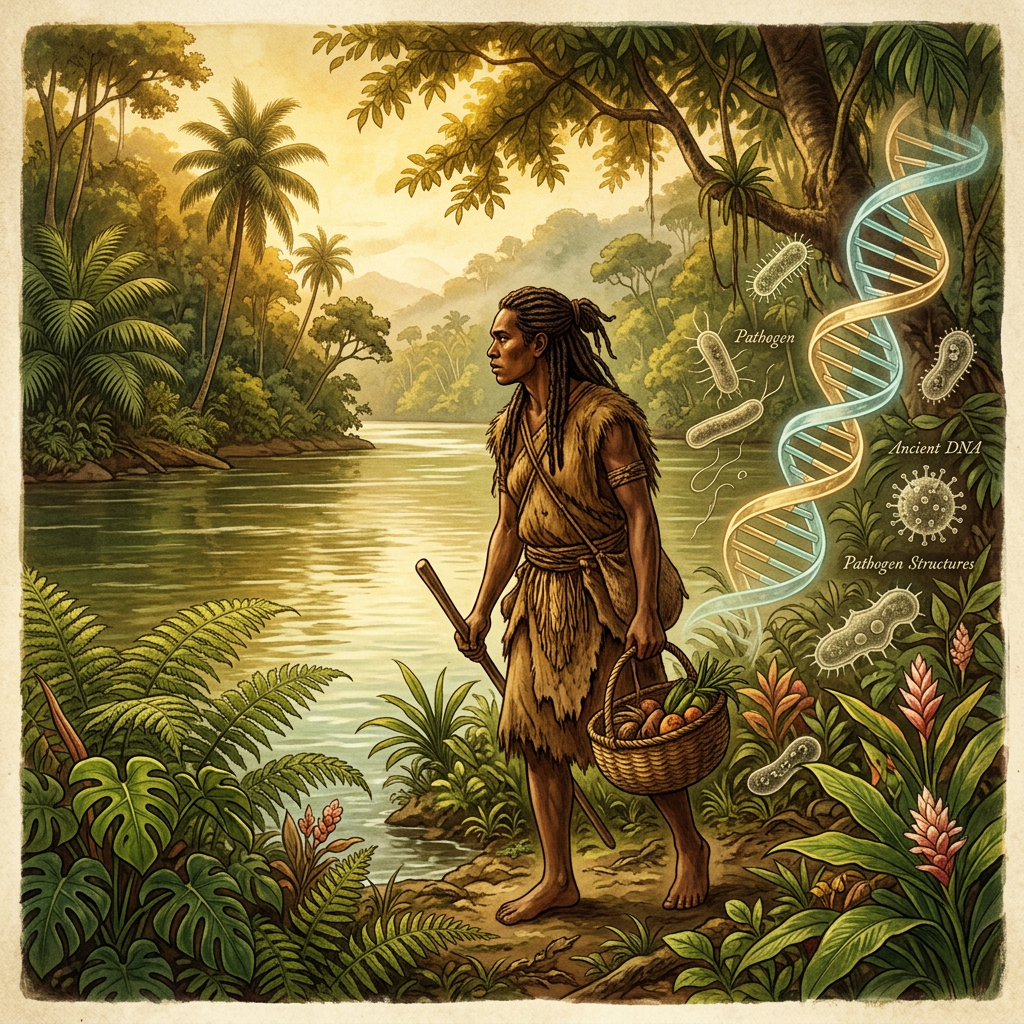
A breakthrough paleogenomic study published in Nature Genetics has mapped the genome of 12,000-year-old skeletal remains discovered in the Visayan Sea region of the Philippines. The research team identified a unique cluster of genes associated with the immune response to water-borne pathogens, specifically those prevalent in ancient tropical riverine and estuarine environments during the early Holocene.
This genetic signature suggests that early maritime foragers in the archipelago underwent a period of rapid evolutionary selection to survive endemic diseases common in slow-moving fluvial systems. The study marks the first time that a specific genetic defense against tropical river-based bacteria has been identified in a late-Pleistocene population, providing new insights into how early humans successfully colonized Southeast Asia's complex island ecosystems.