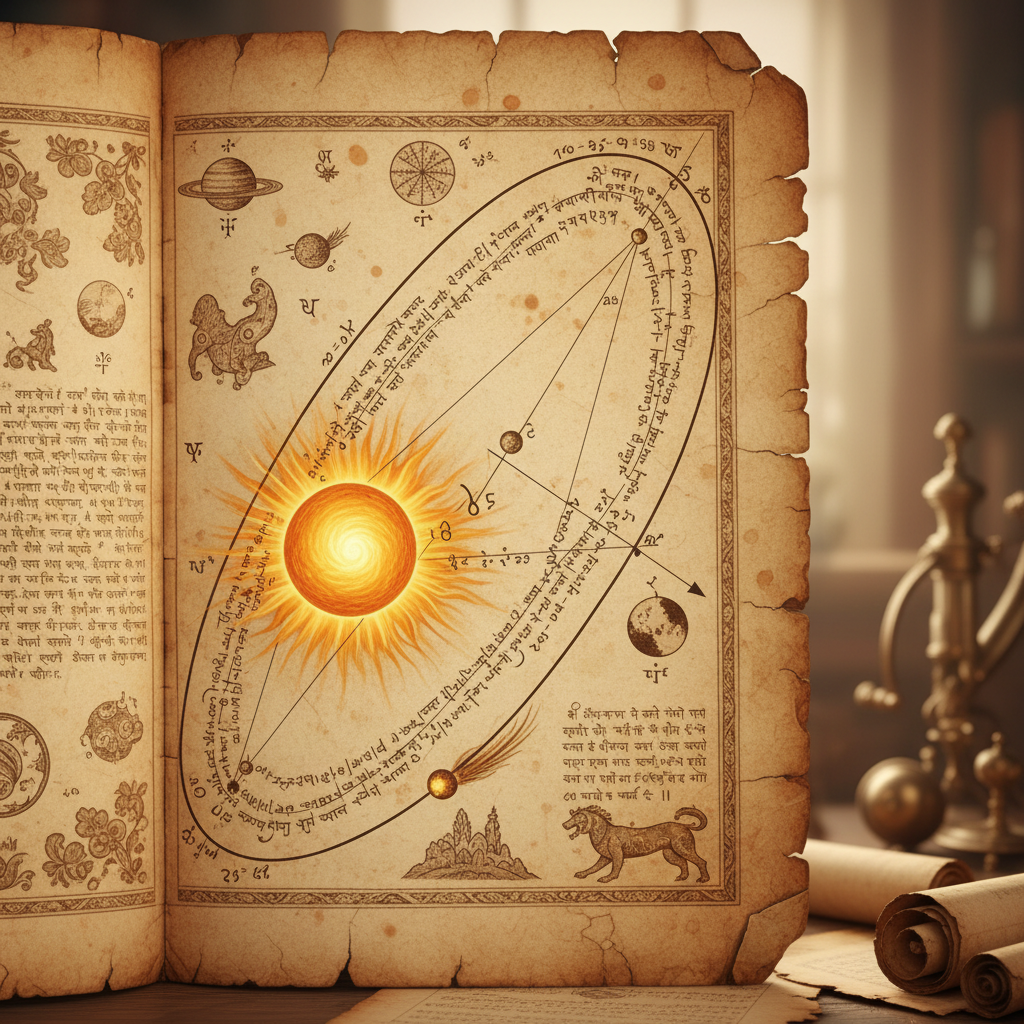
Researchers in the field of ethno-mathematics have identified advanced numerical methods in 10th-century Sanskrit manuscripts known as the Bijaganita-Darshana. The study demonstrates that Indian mathematicians of the era developed algorithms to calculate the orbital precession of Mercury, accounting for non-linear variations in the planet's velocity during its closest approach to the sun.
The analysis indicates that these Sanskrit texts utilized a form of iterative approximation similar to modern perturbation theory. This discovery highlights the remarkable depth of ancient Indian theoretical physics and suggests that the mathematical frameworks used to model the most complex planetary orbits were far more advanced than previously realized in the pre-modern period.