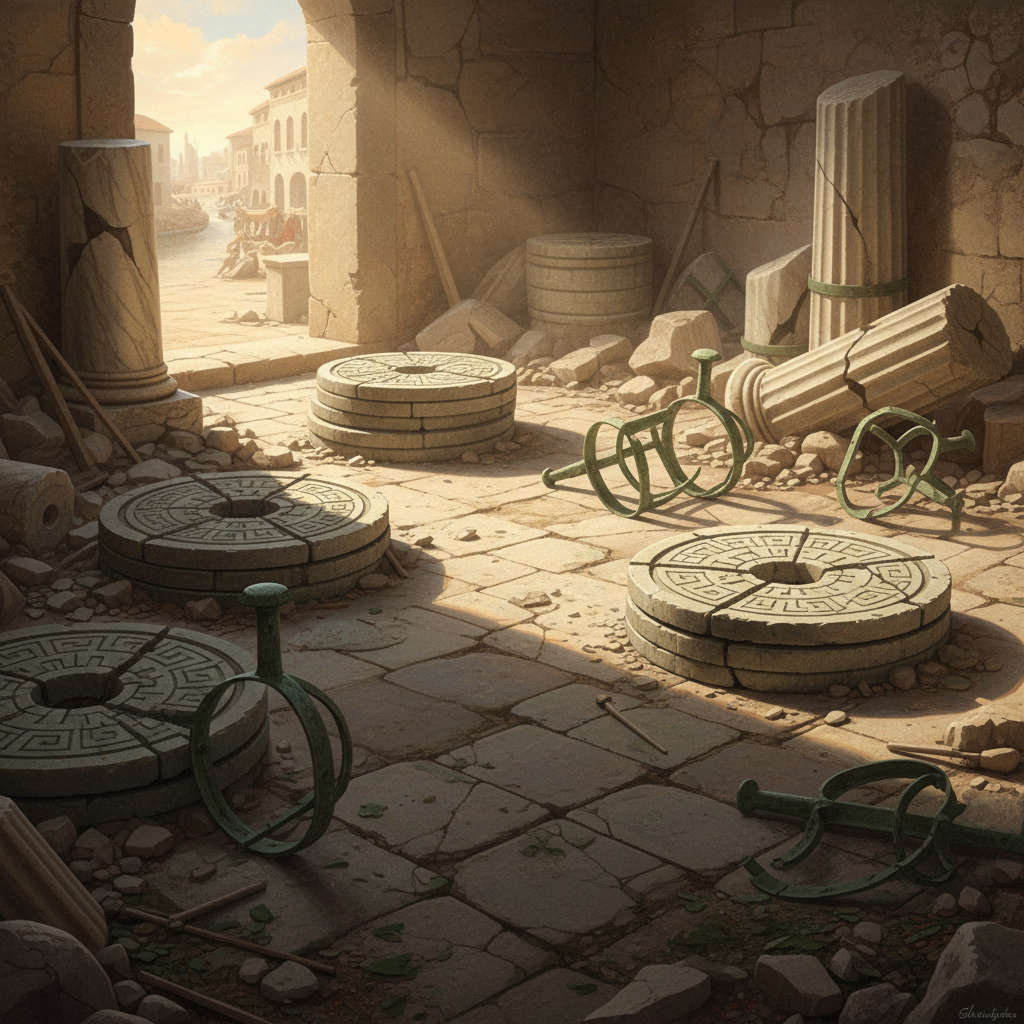
Excavations in the ancient port city of Ostia Antica have revealed a 2nd-century CE industrial complex belonging to the Guild of Imperial Navigation-Lamp Manufacturers. The site contains specialized stone molds for casting large-scale, heavy-duty bronze lamps designed specifically for use on long-distance grain freighters and coastal lighthouses. Archaeologists also discovered a series of standardized sea-oil reservoir templates used to ensure consistent fuel-burning rates for maritime signaling.
This discovery marks the first time a dedicated 'maritime lighting' factory has been identified in the Roman world. The workshop's floor was littered with lead-testing seals and bronze filings, indicating a high-volume production line overseen by the imperial administration. Researchers believe these specialized lamps utilized a unique mixture of thickened olive oil and mineral resins to withstand the high winds and spray of the open Mediterranean, proving the Romans possessed a sophisticated understanding of maritime safety technology.