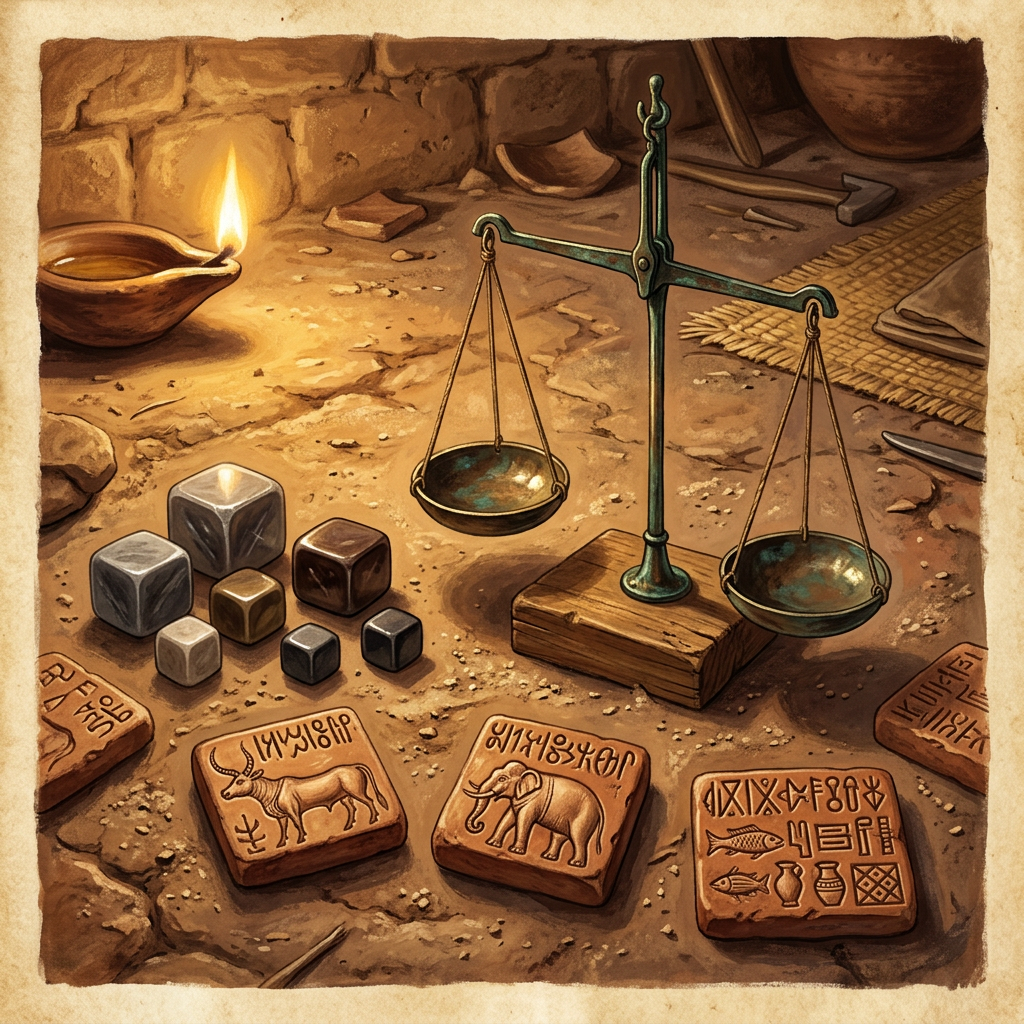
Excavations at a newly identified Mature Harappan site in the Beas River basin have revealed an administrative building dedicated to the trade and processing of rare minerals. Archaeologists found a cache of standardized stone weights and specialized balance-scales, some capable of measuring increments as small as a few milligrams, suggesting a high-value trade in mineral pigments and rare-earth elements used for elite ceramic glazes.
The building contained a 'mineral registry' consisting of hundreds of clay sealings that categorize different types of raw ores, including lapis lazuli, turquoise, and cobalt-rich minerals. This find suggests that the Indus Valley Civilization maintained a centralized control over the supply chain of exotic pigments, which were essential for the production of their iconic multi-colored beads and glazed pottery exported to Mesopotamia.