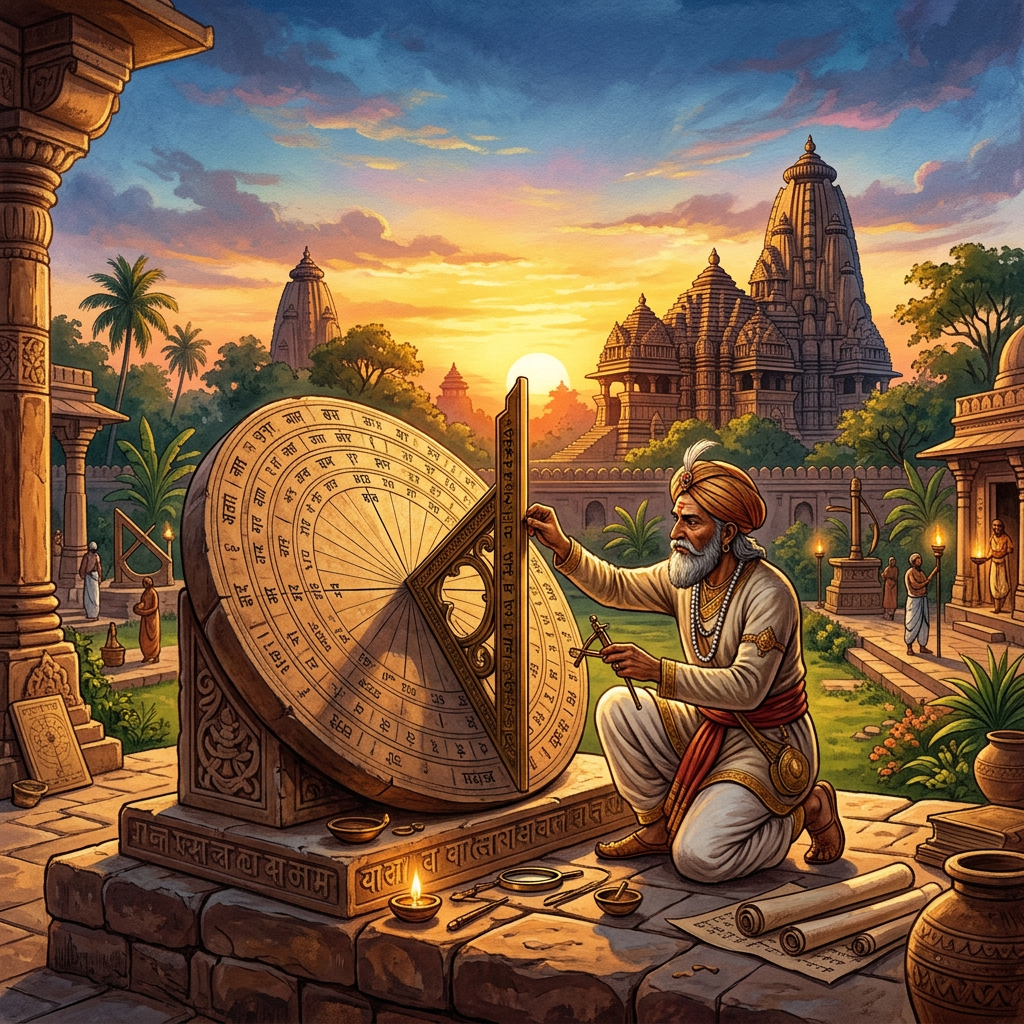
A new academic paper published on April 5, 2026, in the Journal of Astronomical History, explores a rare 10th-century commentary on the Siddhanta-Kaustubha. The research identifies a series of complex Sanskrit algorithms designed to model non-linear fluctuations in the solar disc's apparent diameter during seasonal transitions. These models demonstrate that medieval Indian astronomers had developed pre-telescopic techniques to account for the Earth's orbital eccentricity without the aid of modern optics.
By comparing the manuscript's data with contemporary NASA ephemeris records, the researchers found an unprecedented degree of accuracy in the ancient tables. The study posits that these calculations were based on long-term observational data gathered across a network of specialized Gnomon-based observatories, suggesting a much more organized and standardized approach to empirical science in the 1st millennium CE than previously recognized.