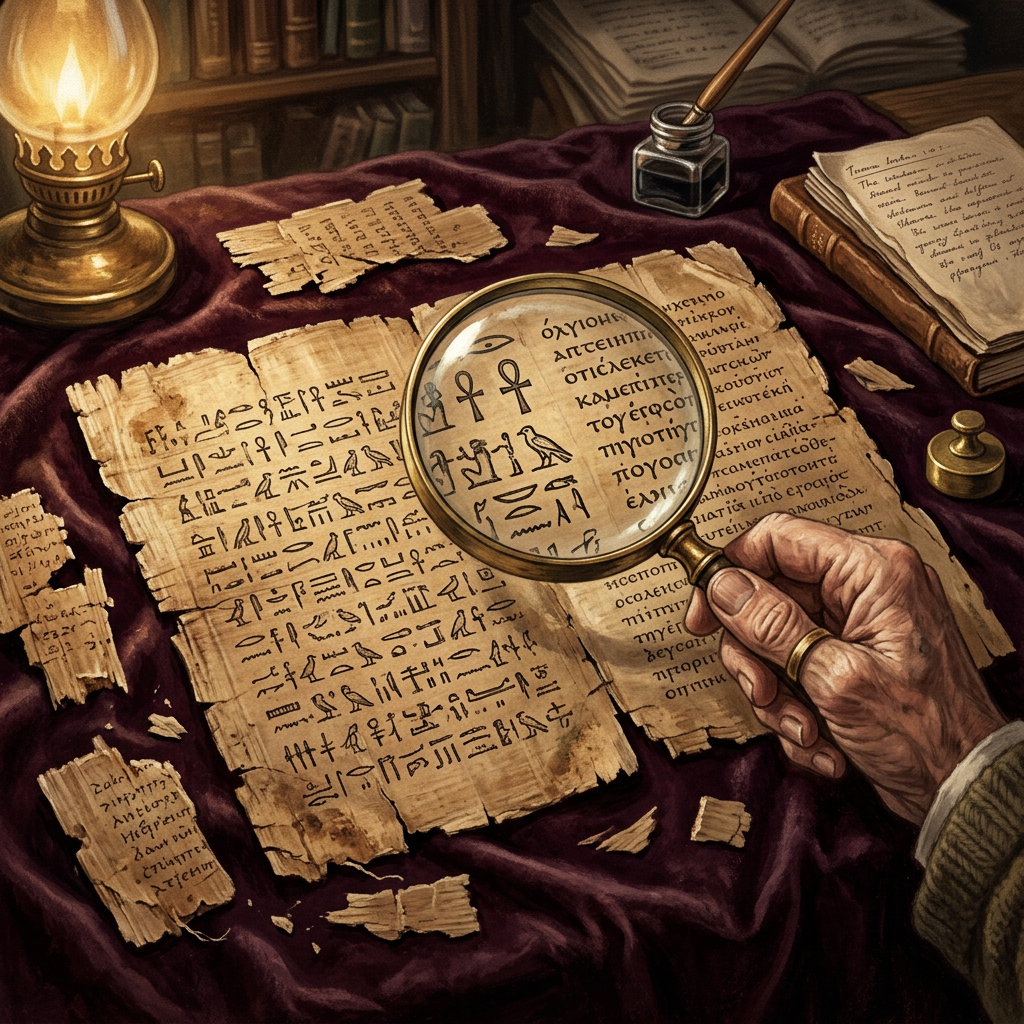
Archaeologists working at the Kampir-Tepe site near Termez have unearthed a collection of 3rd-century BCE papyrus fragments dubbed the Agnoia-Sutra. This discovery provides the first physical evidence of a direct intellectual synthesis between Greek Pyrrhonist skepticism and late Vedic philosophical traditions. The text, written in a unique bilingual script, argues that 'ultimate reality' remains fundamentally unreachable through either sensory perception or logical syllogism.
Preliminary analysis by international scholars suggests the scroll records a debate between a traveling Greek philosopher and an unnamed Vedic sage. Unlike later works that address 'emptiness,' the Agnoia-Sutra focuses on the metaphysics of the unknowable, suggesting that the highest state of wisdom is the active suspension of judgment regarding the nature of the absolute. This find challenges the timeline of when Hellenistic skepticism first encountered Indian thought.