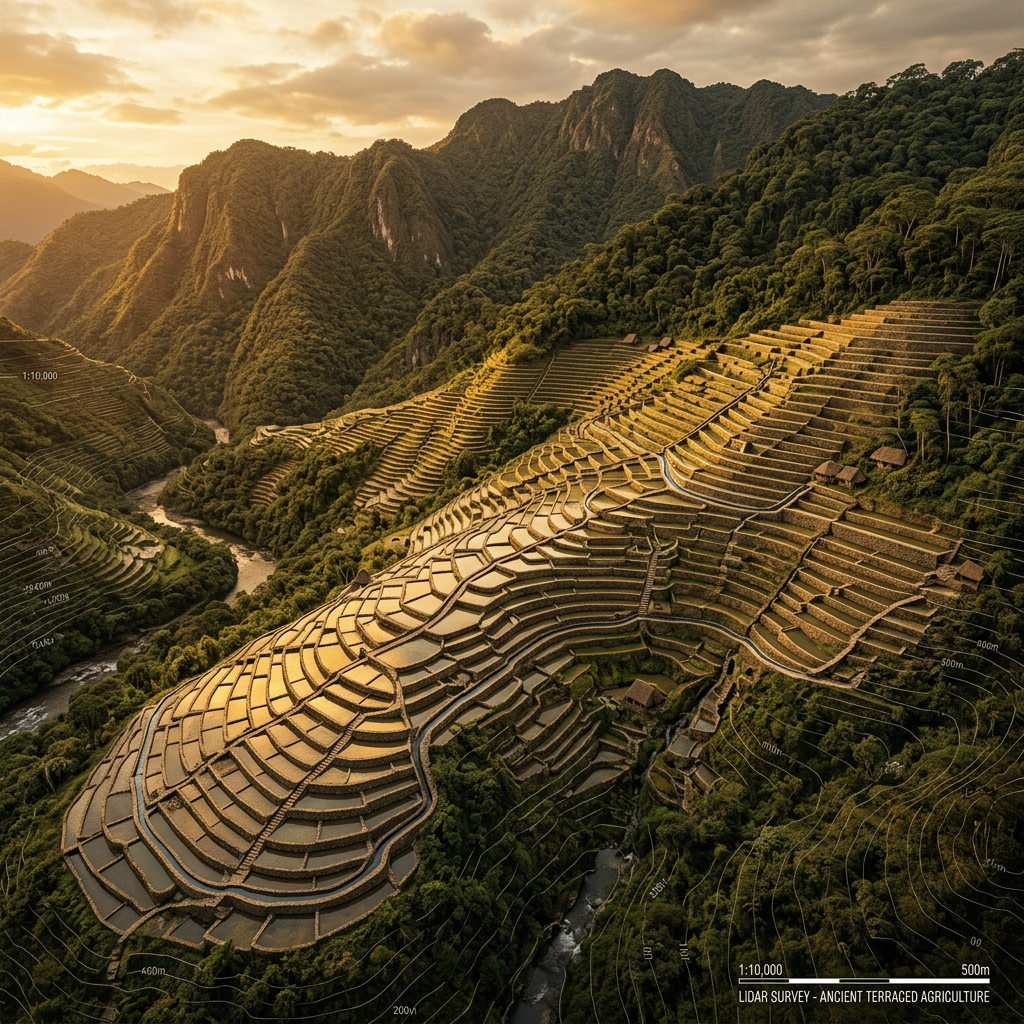
New LiDAR (Light Detection and Ranging) surveys conducted over the dense canopy of northern Guatemala have identified a sprawling industrial landscape hidden for over a millennium. The data reveals a massive vertical salt-evaporation grid consisting of hundreds of terraced stone basins. This complex allowed the Maya to exploit mineral-rich springs, gravity-feeding brine through a network of ceramic-lined channels to be evaporated by the sun.
Researchers note that the site was heavily protected by concentric defensive walls and watchtowers, underscoring the immense strategic value of salt in the Maya heartland. This discovery suggests that interior Maya cities were far more self-sufficient in mineral production than previously believed, reducing their dependence on salt trade routes from the Yucatan coast. The site also includes several large administrative plazas where the salt was likely weighed and packaged for distribution.