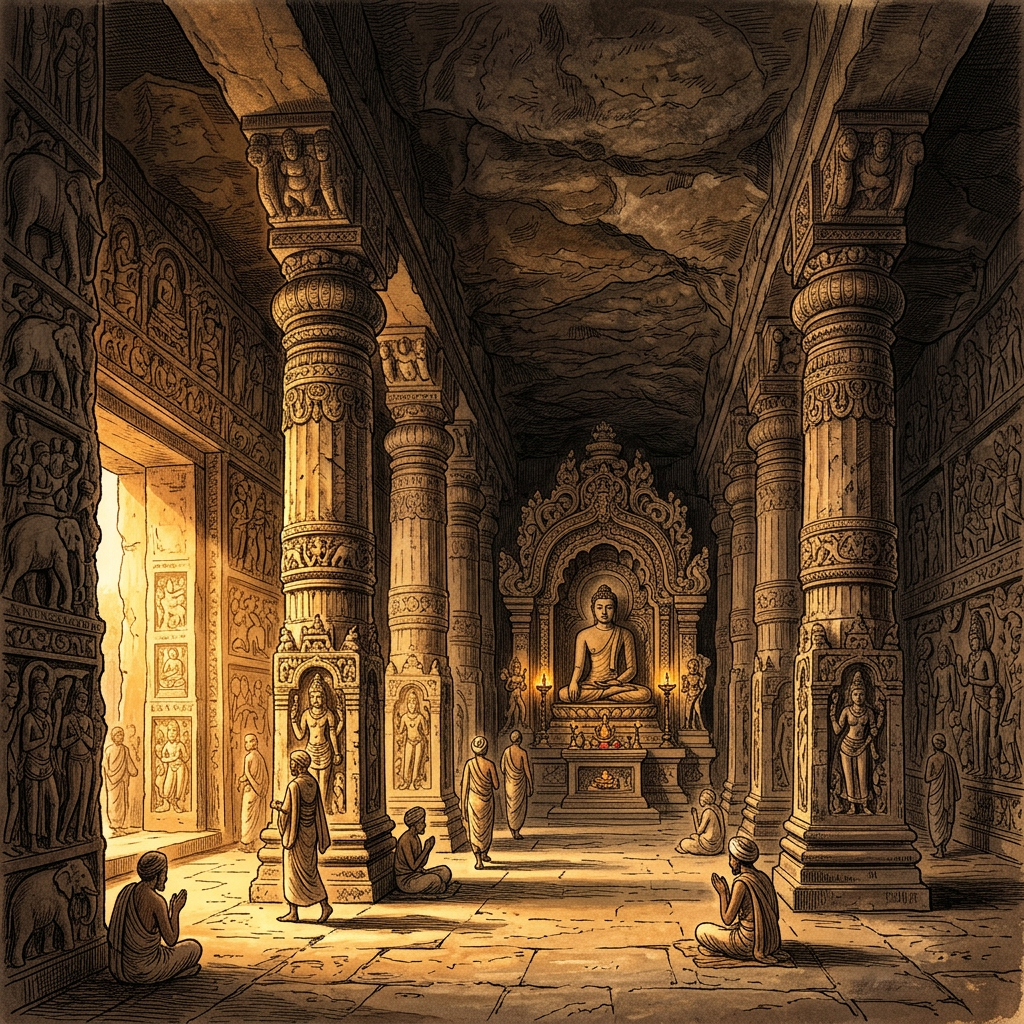
Archaeologists have documented a new rock-cut cave complex in the Sahyadri range that exhibits a rare transitional architectural style between the Early Kalachuri and the Imperial Rashtrakuta eras. The monastery consists of a main prayer hall supported by twelve massive fluted pillars, each featuring capital carvings that depict scenes from the Puranas alongside early depictions of trade guilds.
This finding fills a critical gap in the architectural history of Western India, showing how rock-cutting techniques evolved between the 7th and 9th centuries. The site also contains a unique monolithic water cistern system that remains functional, highlighting the advanced hydraulic engineering practiced by the monastic architects of the era.