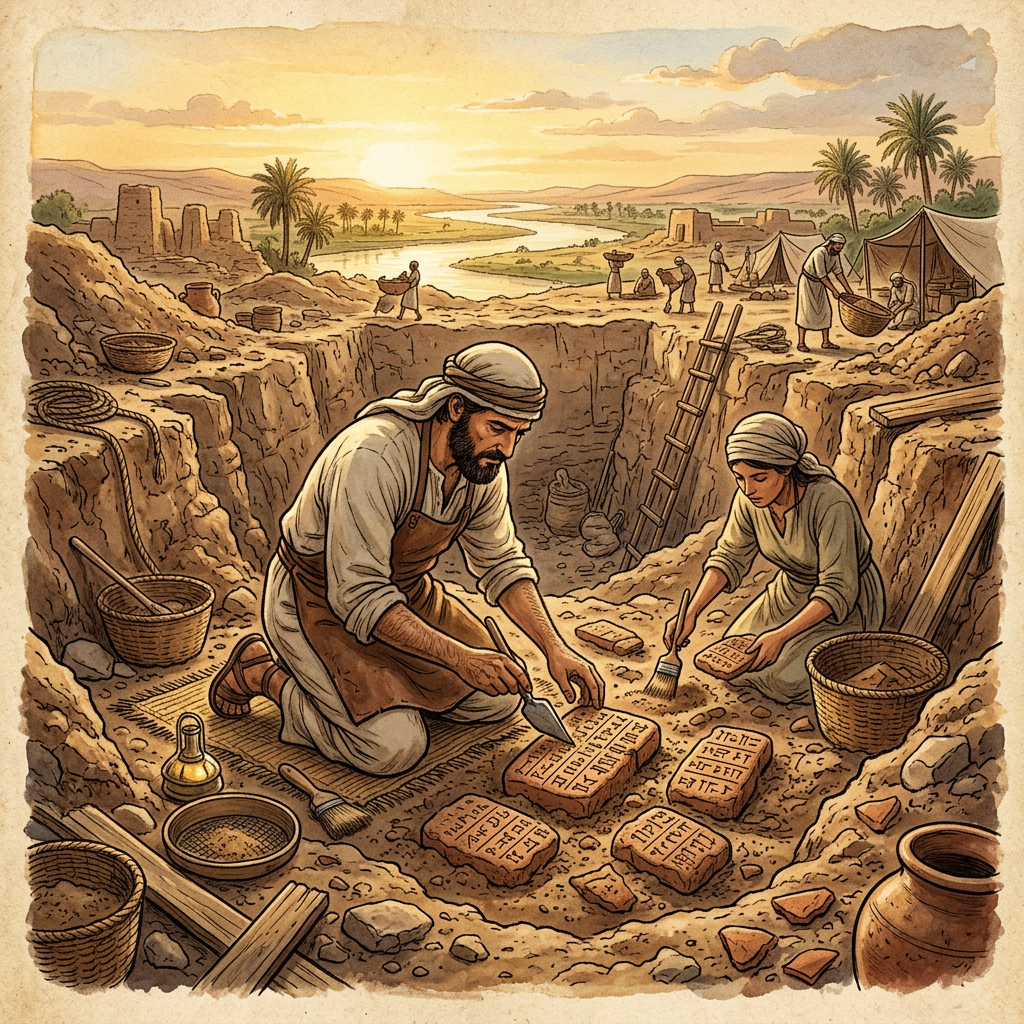
Excavations in the Belan Valley have yielded a cache of terracotta tablets inscribed with a very early form of Brahmi script. Tentatively titled 'Satya-Kala-Nidhi', the inscriptions date to approximately the 6th century BCE and outline a unique philosophical treatise on the intersection of satya (truth) and kala (time). The text argues that truth is not a static object but a dynamic flow that must be synchronized with the rhythmic cycles of the natural world.
Scholars believe these tablets represent some of the earliest recorded evidence of a structured ethical system in the region, predating the formalization of several major philosophical schools. The inscriptions emphasize the Vedic concept of Rta (cosmic order), suggesting that individual virtue is achieved only when one's actions are in 'harmonic resonance' with the temporal seasons. This discovery is expected to provide fresh insights into the pre-Mauryan intellectual landscape of ancient India.