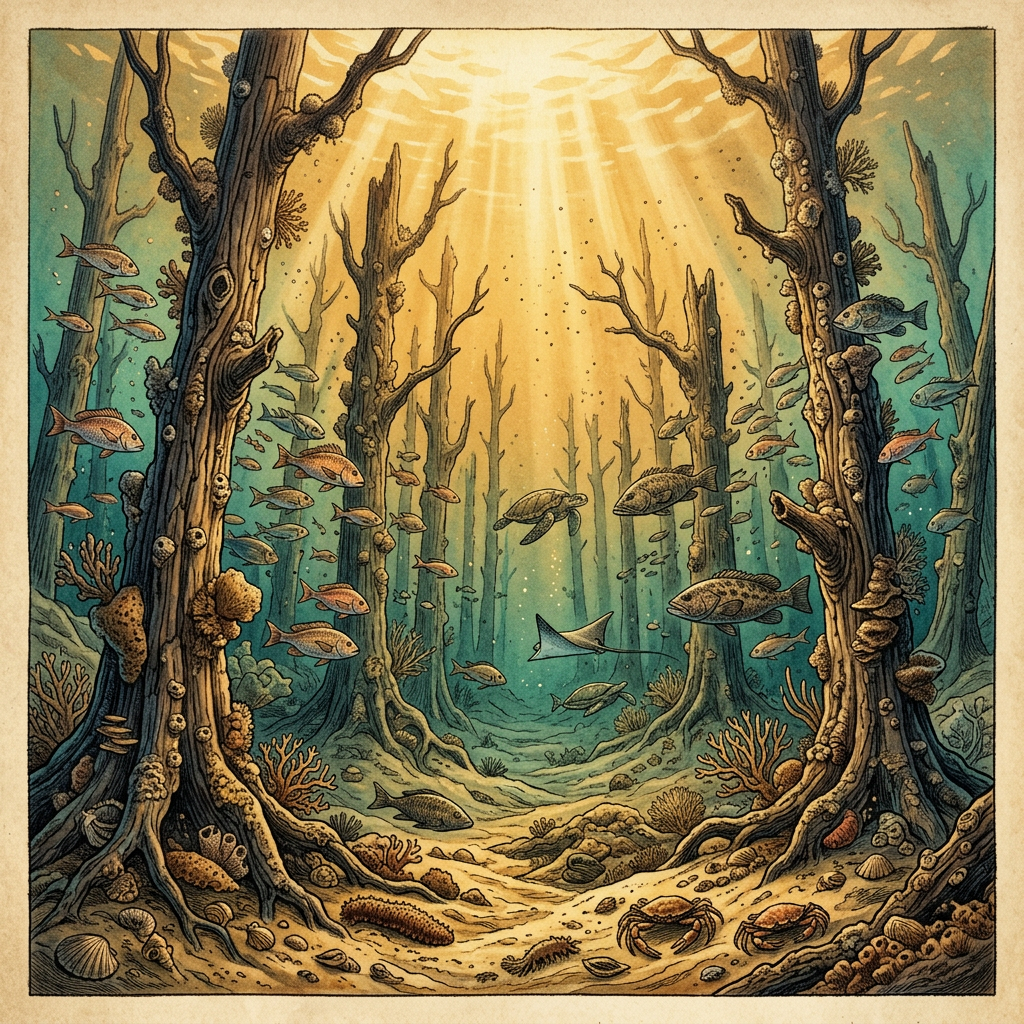
Environmental archaeologists have successfully extracted and mapped the ancient DNA from submerged ‘Ghost Forests’ beneath the Baltic Sea. These forests, preserved in anaerobic conditions for over five millennia, provide a high-resolution record of how prehistoric ecosystems adapted to the rapid sea-level rise following the last glacial period. The research team identified genetic markers in ancient oak and pine samples that suggest early botanical shifts in response to increased salinity.
The data provides a critical historical baseline for modern climate scientists studying the resilience of coastal forests. By understanding how these ancient landscapes transitioned from terrestrial woodlands to submerged marshes, researchers hope to predict the impact of current global warming on the Baltic coastline. The study also uncovered traces of Neolithic gathering tools made from the very wood that eventually became submerged, linking human activity to these changing environments.