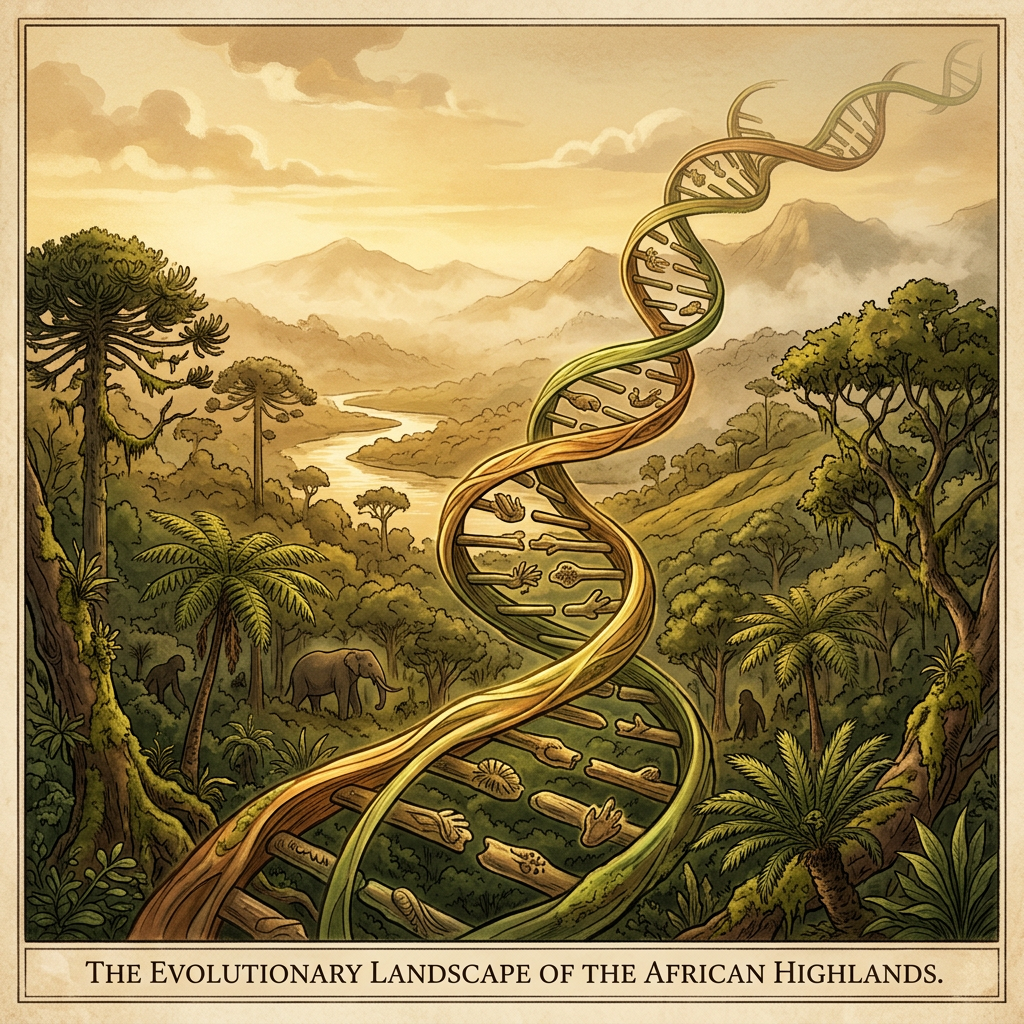
A breakthrough in paleogenomics has allowed scientists to reconstruct the genome of a hunter-gatherer who lived in the Zambezi Highlands over 15,000 years ago. Published in Human Evolutionary Genetics, the research identifies a distinct Pleistocene lineage that diverged from other sub-Saharan populations and developed specific genetic markers for resistance to endemic forest-borne pathogens.
The study suggests that this population remained isolated for several millennia, allowing for unique biological adaptations to the high-humidity forest environment. These findings complicate existing models of human dispersal in Africa and highlight the diversity of genetic responses to localized ecological pressures during the terminal Pleistocene epoch.