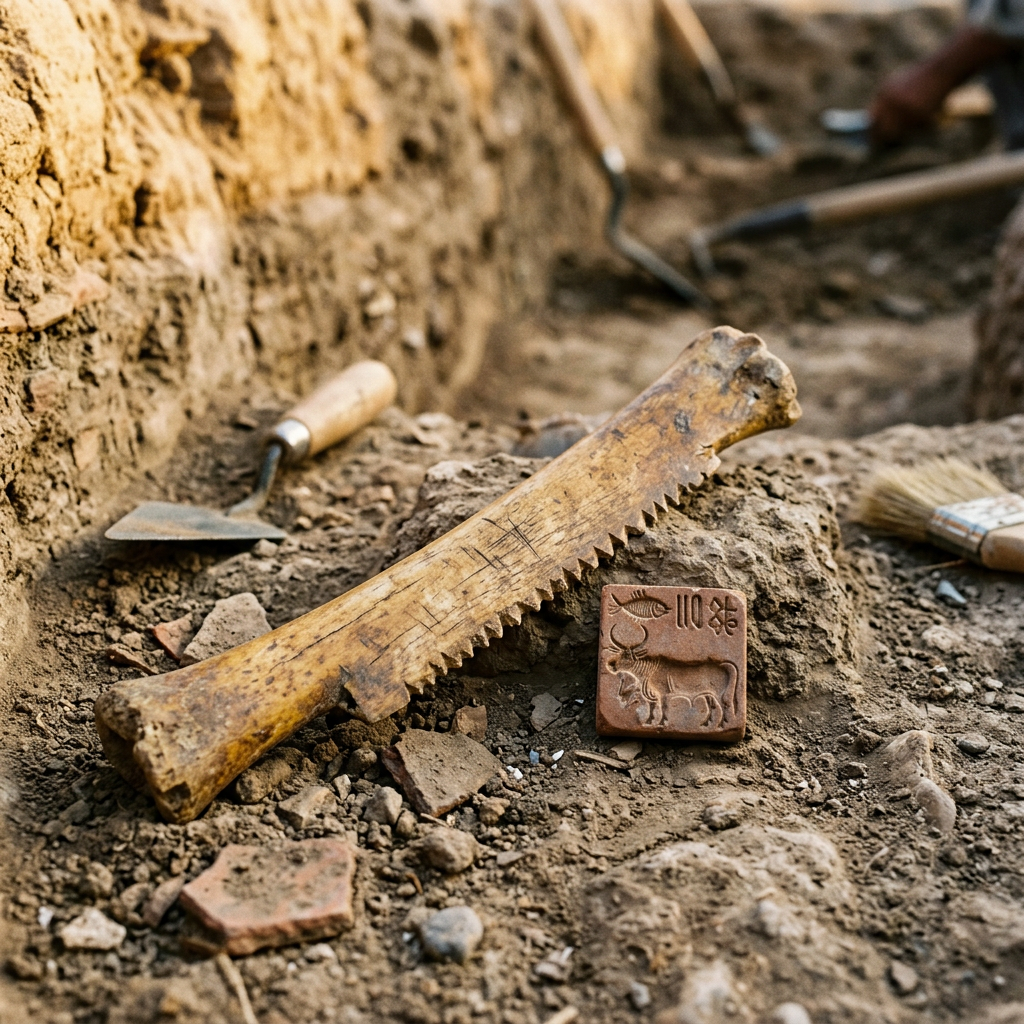
Archaeologists at the Rakhigarhi site have uncovered a specialized administrative quarter belonging to the Master of the Royal Ivory-Inlays, a high-ranking official responsible for the production of decorative furniture and ritual objects during the Mature Harappan phase. The excavation revealed a collection of terracotta sealings detailing procurement quotas for elephant tusks from the western hinterlands and a cache of exceptionally preserved bone precision-saws used for delicate geometric cutting.
The find is significant because it provides the first evidence of a centralized oversight body for luxury craft standardization in the Indus Valley Civilization. Analysis of the debris indicates that the workshop utilized a specific mineral-based adhesive to secure ivory into teak-wood frames, a technique previously thought to have developed much later. This discovery underscores the complexity of Harappan industrial hierarchies and their mastery of micro-engineering tools.