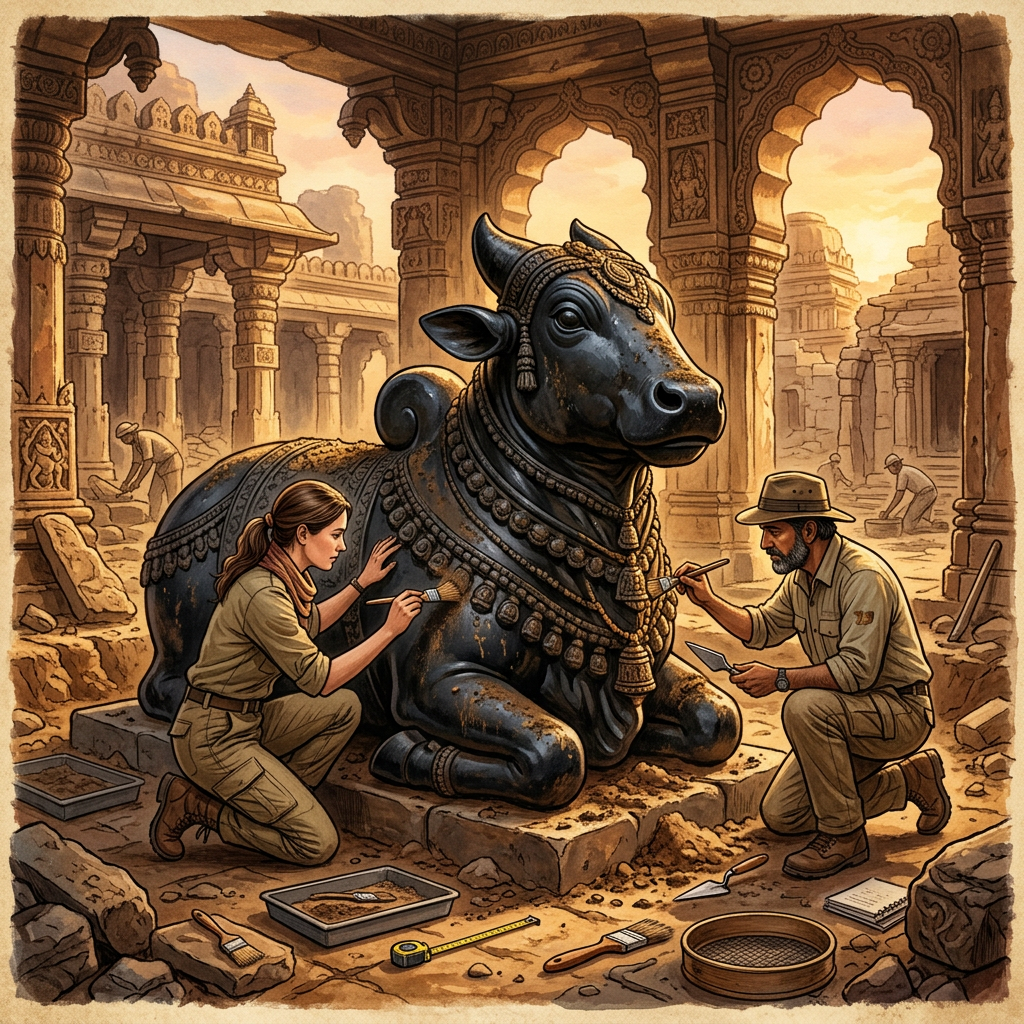
A significant archaeological site has been identified in the Sangareddy district of Telangana, revealing the foundations of an 11th-century Western Chalukya temple. Excavations have uncovered a highly unusual construction technique where the primary sanctum was lined with a double-layered stone wall containing a central cavity filled with mercury-amalgam. Local researchers believe this was intended to provide thermal insulation and acoustic resonance, creating a unique sensory environment for meditation.
The temple's outer walls are decorated with intricate carvings of deities and floral motifs, characteristic of the Kalyani Chalukya aesthetic. A large Nandi pavilion was also found mostly intact, featuring a monolithic bull carved from polished black basalt. The discovery has prompted calls for a comprehensive survey of the surrounding area, as subsurface radar suggests more structures may be buried beneath the current ground level.