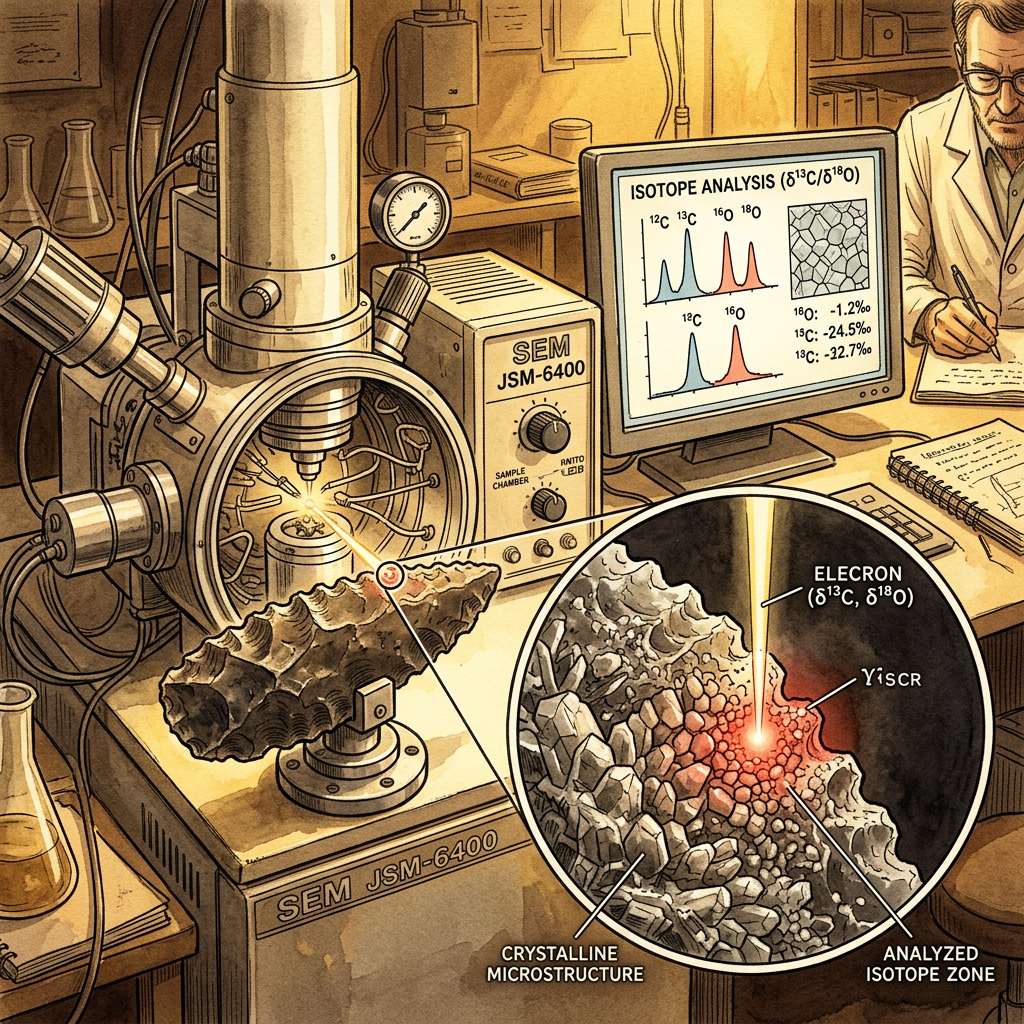
A new study published in Science Advances introduces a revolutionary dating technique called Titanium-50 Isotopic Chronometry, which has been applied to early agricultural sites in the Lower Yangtze Valley. This method measures the diffusion rates of titanium isotopes within the crystalline structure of micro-silica residues left on ancient stone tools. Unlike traditional radiocarbon dating, which relies on organic remains that often degrade in acidic soil, this new technique provides a precise timeline based on the actual physical use of the artifacts.
The application of this methodology to sites near the modern-day Hangzhou Bay has pushed back the arrival of the Neolithic transition in the region to approximately 7200 BCE. The data reveals a rapid shift from broad-spectrum foraging to focused aquatic management and the early stages of wild rice cultivation. The precision of the 'Titanium-50' method—achieving a margin of error of less than 25 years—allows researchers to observe how early settlers responded to specific decadal-scale climate fluctuations during the Early Holocene.
Archaeologists argue that this high-resolution chronology fundamentally changes the understanding of how agriculture emerged in East Asia. The transition appears more gradual and more closely linked to stable riverine environments than previously assumed. As this technique is adopted globally, it is expected to solve long-standing chronological disputes in regions where organic preservation is poor, particularly in tropical and subtropical river basins.