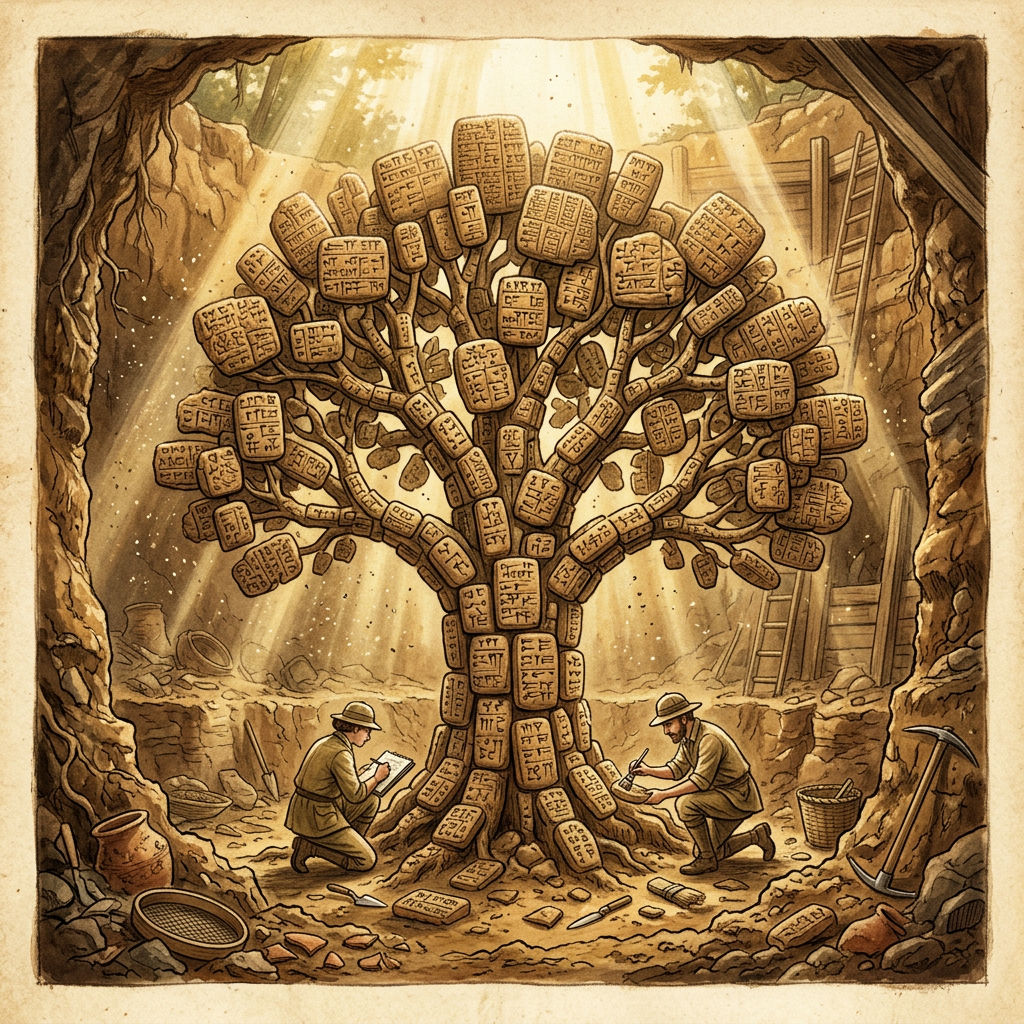
In the Ghaggar-Hakra Basin, a new excavation has revealed 5th-Century BCE clay tablets inscribed with the 'Jnana-Vriksha' or 'Tree of Knowledge'. These tablets detail a Philosophy of Epistemic Growth, using the elaborate metaphor of a growing tree to describe the systematic stages of human intellectual and spiritual development. The text emphasizes that knowledge is an organic process that requires specific foundational conditions to flourish.
The tablets are notable for their emphasis on root virtues like patience and rigorous inquiry as the necessary groundwork for the 'branching' of higher wisdom. Researchers believe these tablets belonged to an early, pre-systematic school of thought that prioritized the cultivation of the intellect over traditional ritualism, marking a significant turn in early Sanatan Dharma philosophy.