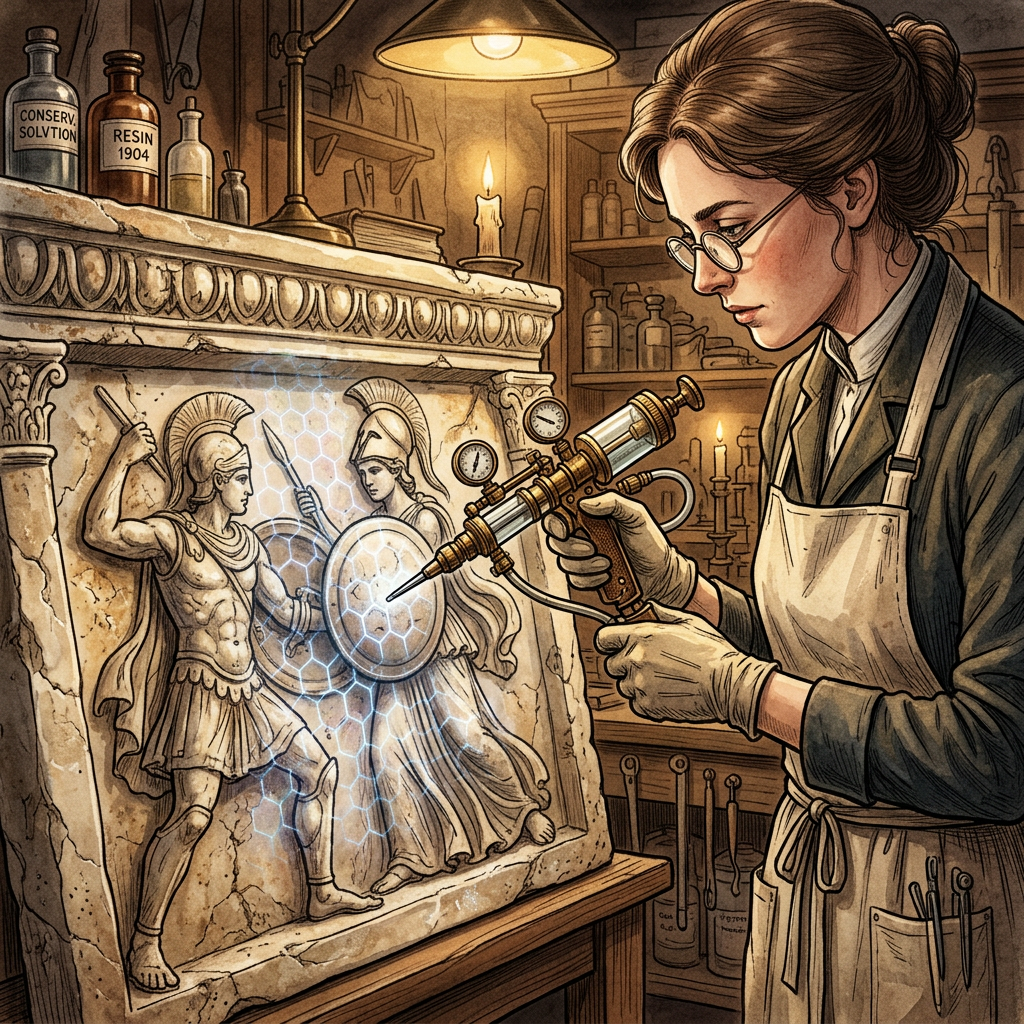
Conservationists at the Pergamon Museum in Berlin have successfully deployed a revolutionary graphene-silicate nanofilm to safeguard the iconic Great Altar of Pergamon. The ultra-thin, transparent layer is designed to be molecularly permeable to moisture while blocking corrosive urban pollutants and sulfur dioxide that cause stone 'caking' and marble erosion.
This pilot project, a collaboration with the Fraunhofer Institute, represents a breakthrough in heritage preservation technology. The nanofilm is reversible and provides a protective barrier that is invisible to the naked eye, ensuring that the intricate Hellenistic friezes remain visible to researchers while halting the chemical degradation that has threatened the monument for decades.