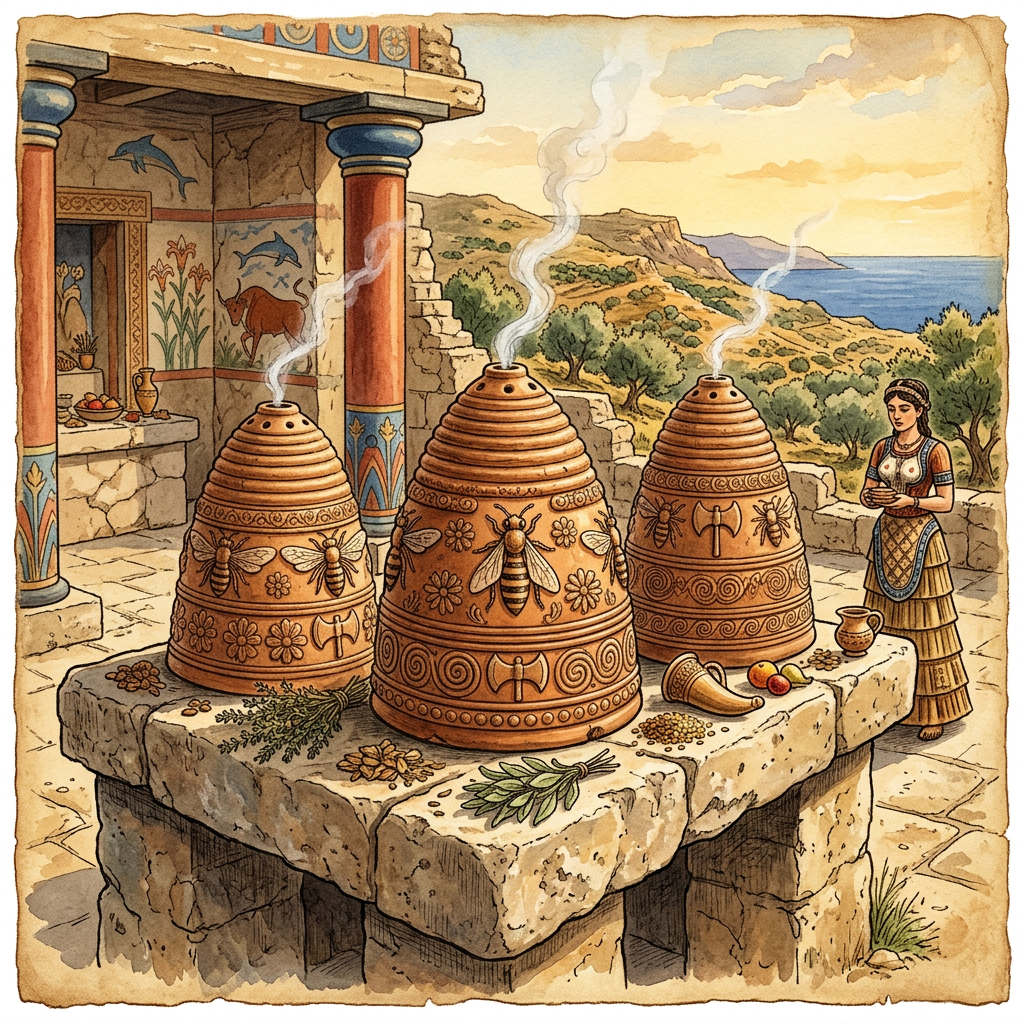
A recent excavation at a remote Minoan sanctuary on the island of Crete has unearthed a series of honey-scented ceramic incense burners. The vessels, which still retain traces of propolis and aromatic resins, were found arranged in a circular formation around a central stone altar. Inscriptions found on nearby clay tablets identify the site as a venue for the "Festival of the First Swarm," a spring rite dedicated to ensuring the health of local apiaries.
The ritual site includes evidence of a specialized nectar-pouring drainage system, where libations were directed into the earth to appease chthonic deities. Lead archaeologist Dr. Elena Vassiliki notes that the find reveals the economic and religious importance of apiculture in Minoan society, demonstrating how seasonal biological events were transformed into grand cultural celebrations with complex liturgical requirements.