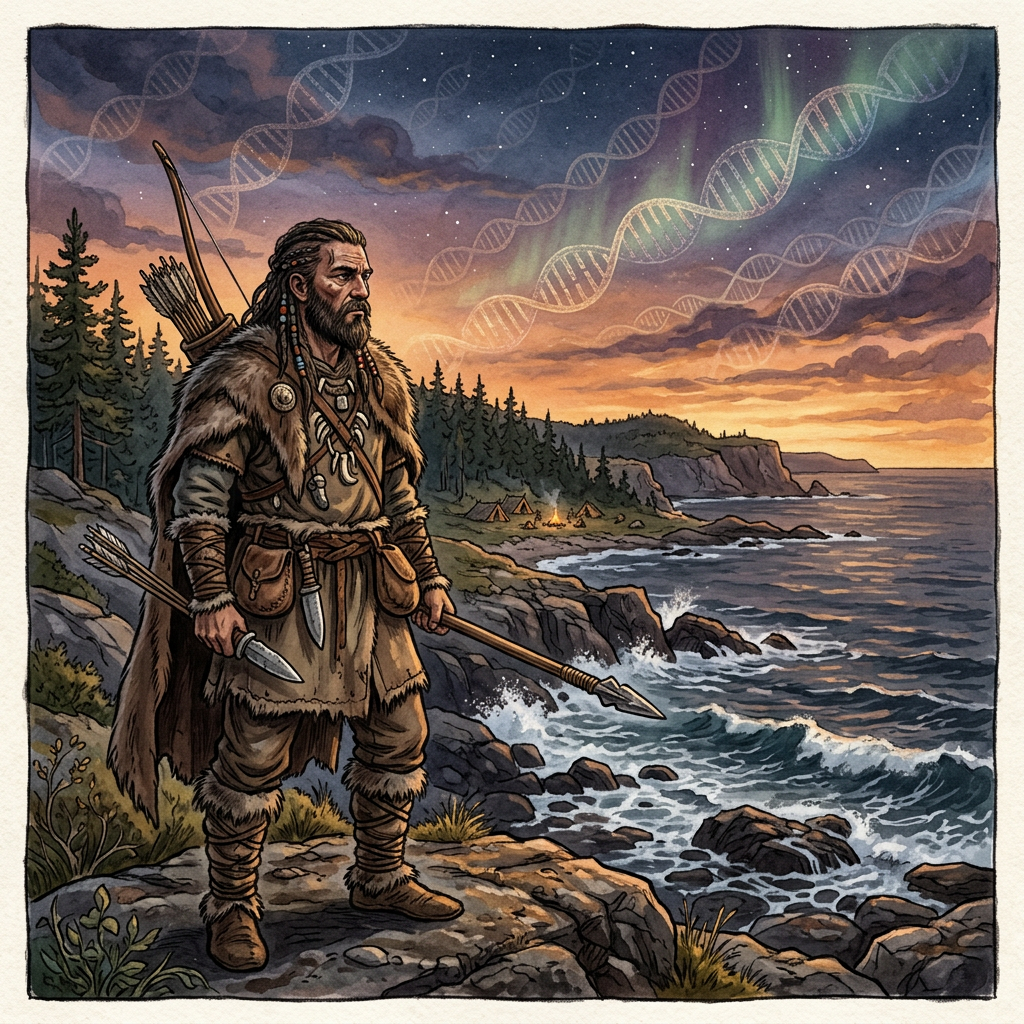
A breakthrough paleogenomic study published in Nature Heritage has mapped the complete genome of several individuals from the Neolithic Pitted Ware Culture in Scandinavia. The research identifies a specific genetic adaptation linked to the regulation of circadian rhythms and melatonin production, which allowed these coastal hunter-gatherers to thrive in extreme northern latitudes with highly variable seasonal light cycles.
The study suggests that these populations underwent a rapid selective sweep that distinguishes them from contemporary farming groups in Central Europe. This genetic resilience to photoperiodic stress—often associated with seasonal affective disorders in modern populations—provides new insights into how ancient humans biologically adapted to the unique environmental challenges of the sub-arctic and Baltic regions during the Holocene transition.