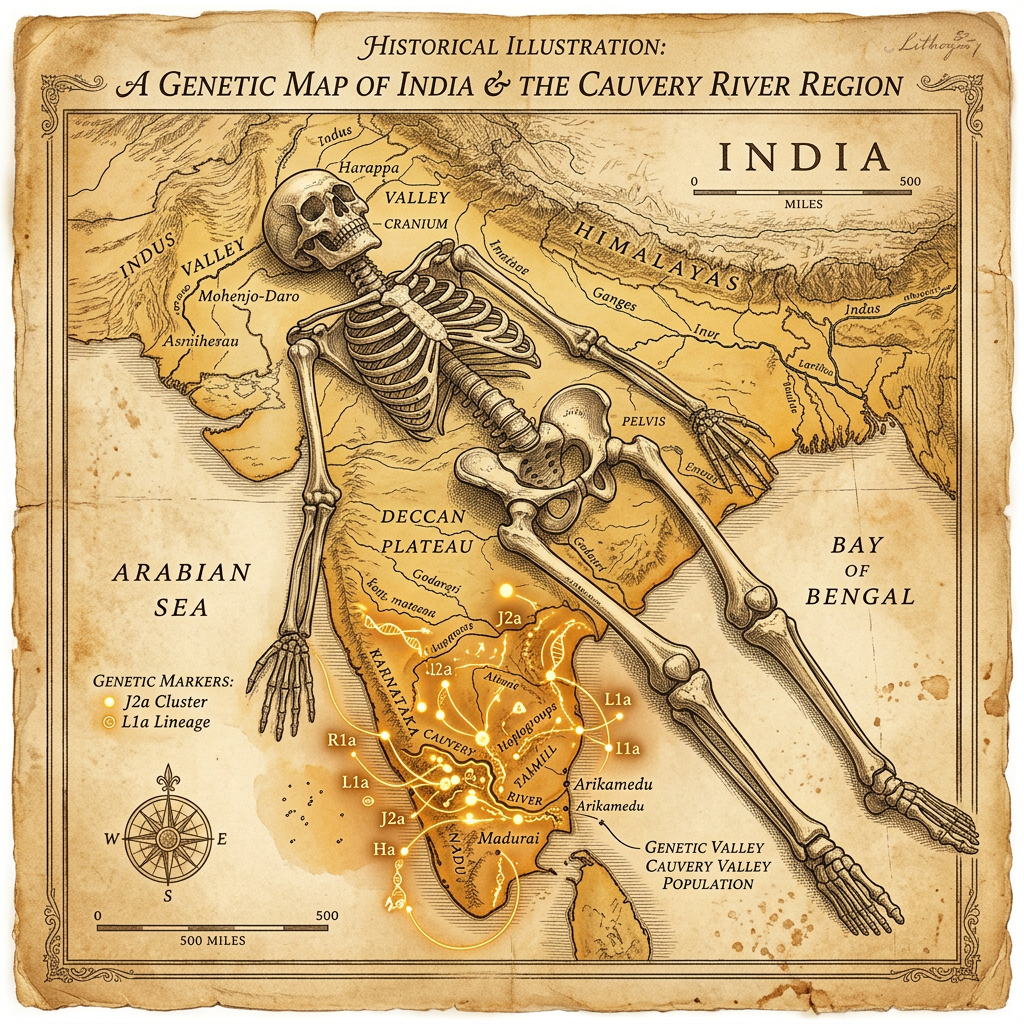
A comprehensive paleogenomic analysis conducted on Neolithic remains found in the Cauvery Basin of Tamil Nadu has identified the earliest known genetic markers for resilience to endemic fluvial mycotoxins. The study, appearing in Genome Research, sequenced DNA from individuals dating to 6500 BCE, revealing a unique evolutionary signature on the CYP3A4 gene cluster. This adaptation likely developed as a defense against toxins produced by specific waterborne molds prevalent in the humid, riverine environments of the southern Indian peninsula during the early Neolithic transition.
The research provides the first genetic evidence that the early agriculturalists of the Cauvery valley were undergoing significant biological stress as they shifted from nomadic hunting to intensive riparian farming. The study also identifies a distinct ghost lineage of hunter-gatherers that interbred with arriving pastoralist groups, contributing these specialized immunity genes to the modern South Asian gene pool. This breakthrough in anthropological research clarifies the complex interplay between environmental pathogens and the spread of early farming cultures in India.