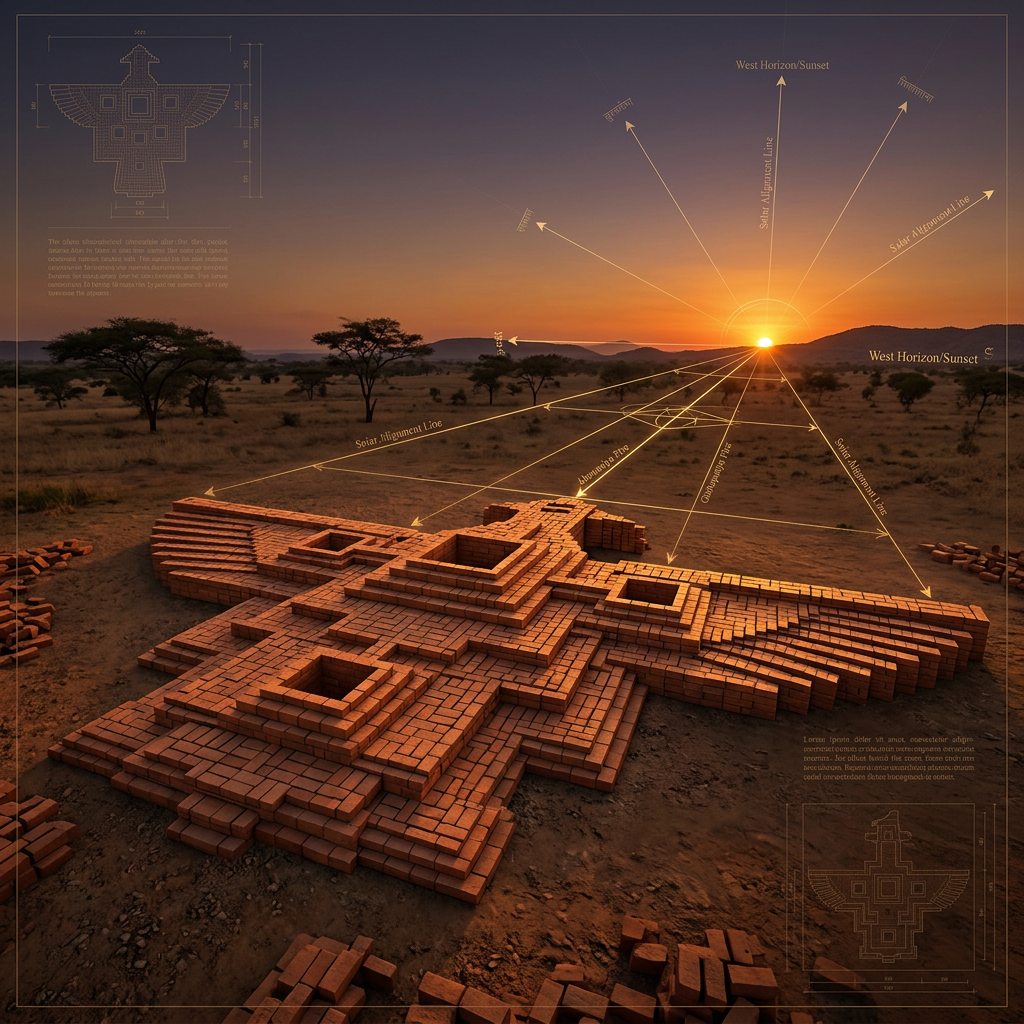
A computational study published in the International Journal of Vedic Mathematics has identified a complex series of recursive algorithms embedded within the geometric prescriptions of the Shatapatha Brahmana. By modeling the specific brick-layering sequences described for the Agni-Chayana ritual, researchers have discovered that the dimensions of the fire altars were designed to calculate the Earth's obliquity (axial tilt) with a precision that rivals later Greek observations. This research suggests that 1st millennium BCE Vedic astronomers utilized seasonal shadow-length measurements to derive the varying angle of the solar zenith over multi-year periods.
The study highlights how the 'recursive' nature of the sacrificial layers served as a physical computer, allowing priests to track the precessional drift of the solstices relative to the star Krittika (Pleiades). By applying modern spherical trigonometry to the altar dimensions, the researchers demonstrated that the Vedic scholars of the period had calculated the tilt to be approximately 23.8 degrees, a remarkably accurate figure for 1000 BCE. This breakthrough validates the high level of astronomical research and mathematical sophistication present in ancient India.