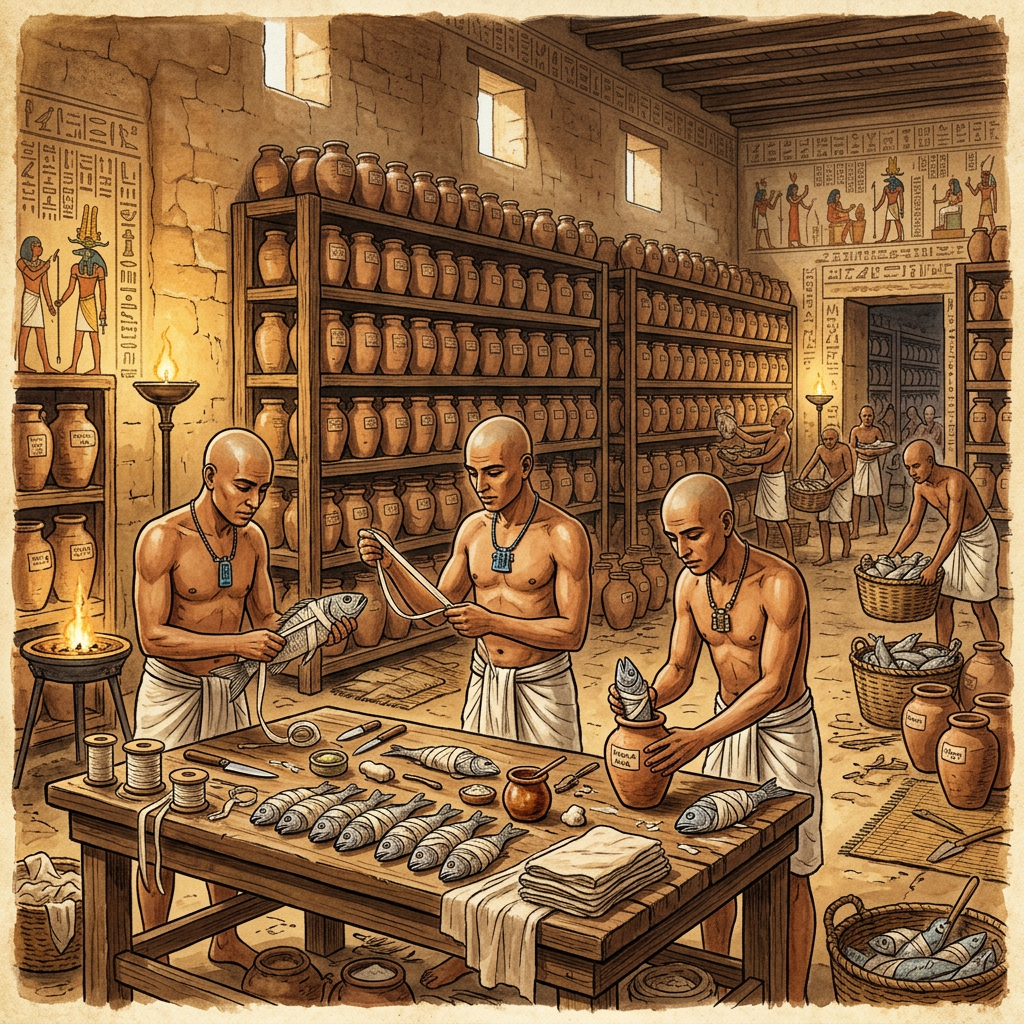
A joint Egyptian-German mission at the ancient city of Sais in the Nile Delta has revealed a sprawling Ptolemaic-era industrial complex dedicated to the mummification of fish. The site contains hundreds of specialized ceramic vats used for the desiccation of Nile perch and catfish, which were considered sacred to the goddess Neith. Over 5,000 intact fish mummies, many wrapped in fine linen and placed in individual clay jars, were found stacked in subterranean vaults.
The discovery includes a dedicated ritual scriptorium where priests recorded the numbers of offerings and the names of the donors. Unlike royal tombs, this center highlights the "democratization" of religious practices, where commoners could purchase mummified animals as votive offerings to seek divine favor. The scale of the facility suggests a massive economic operation that employed hundreds of specialized embalmers and potters in the late Pharaonic period.