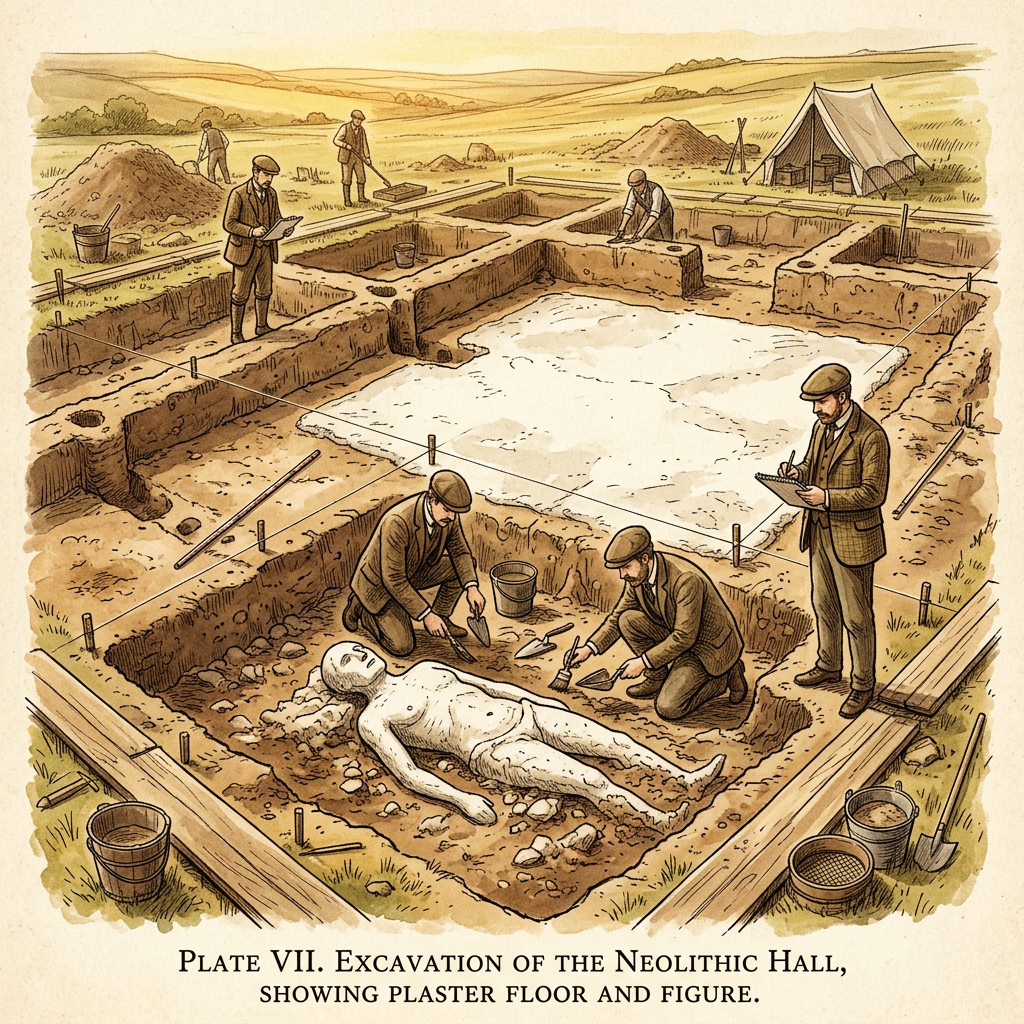
Archaeologists excavating a Pre-Pottery Neolithic B (PPNB) site in the Golan Heights have unearthed a massive communal structure characterized by a polished lime-plaster floor. In a hidden pit beneath the floor, the team discovered a cache of three nearly life-sized anthropomorphic statues made of reed bundles coated in gypsum plaster. These figures, which pre-date the invention of pottery, represent some of the earliest known examples of monumental human sculpture in the Levant.
The structure appears to have served as a proto-urban assembly hall, featuring a central hearth and specialized stone bins for communal grain storage. The proximity of the statues to the hearth suggests they played a role in ancestor veneration or communal feasting rituals. This discovery challenges existing models of early social organization by proving that hunter-gatherer societies transitioning to agriculture were capable of large-scale cooperative construction and complex symbolic expression.