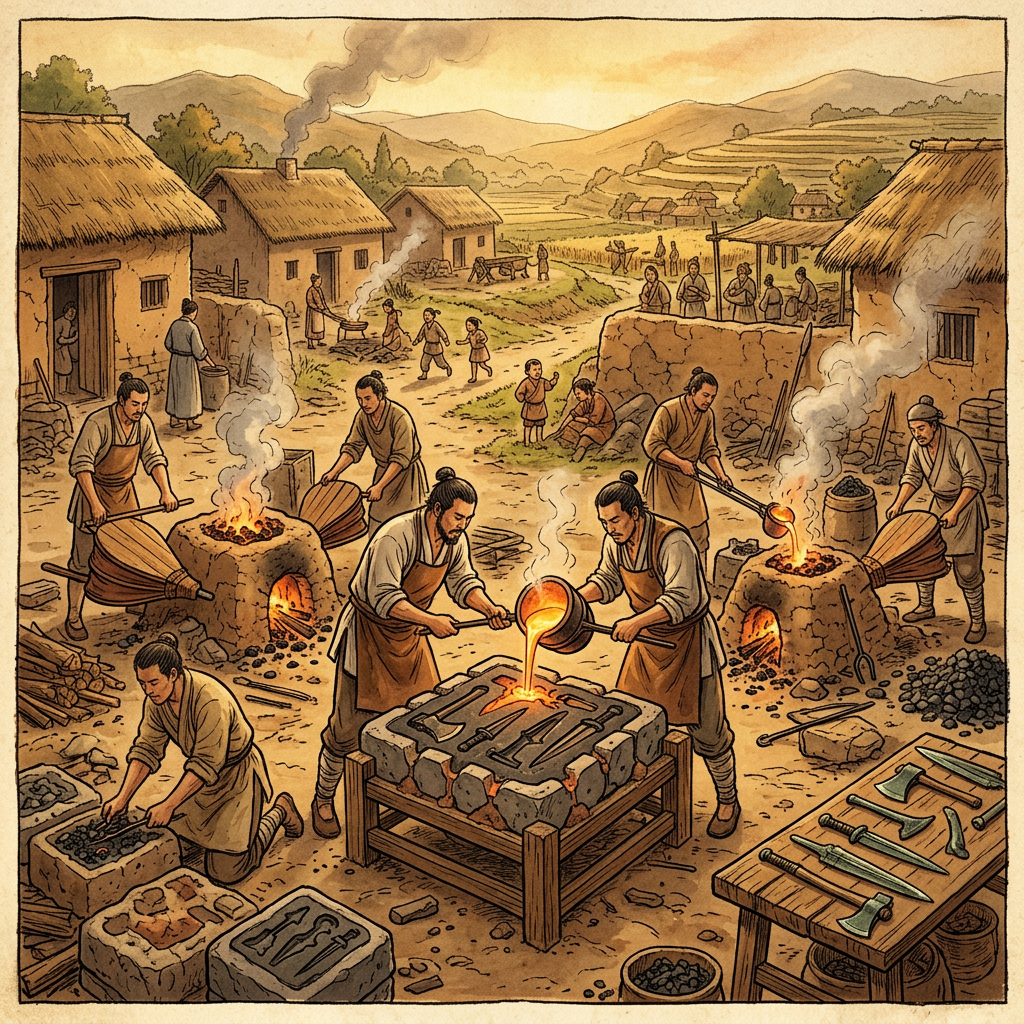
A major excavation in the Hexi Corridor of China's Gansu province has revealed a well-preserved 4,000-year-old village belonging to the Qijia Culture. The site provides the earliest evidence of arsenic-bronze metallurgy in the region, featuring over twenty specialized smelting pits and dozens of stone molds for casting spearheads and axes. Chemical analysis of the slag indicates that these early metallurgists purposefully added arsenic to copper to increase the hardness and luster of their tools.
The village layout shows a highly organized industrial quarter separated from the residential areas, suggesting a specialized class of metalworkers. Also found were rare turquoise-inlaid ornaments and evidence of domesticated sheep, pointing to strong cultural links with nomadic groups from the Eurasian Steppe. This discovery reshapes our understanding of the technological transition into the Bronze Age in East Asia and the spread of metallurgical knowledge along the proto-Silk Road.