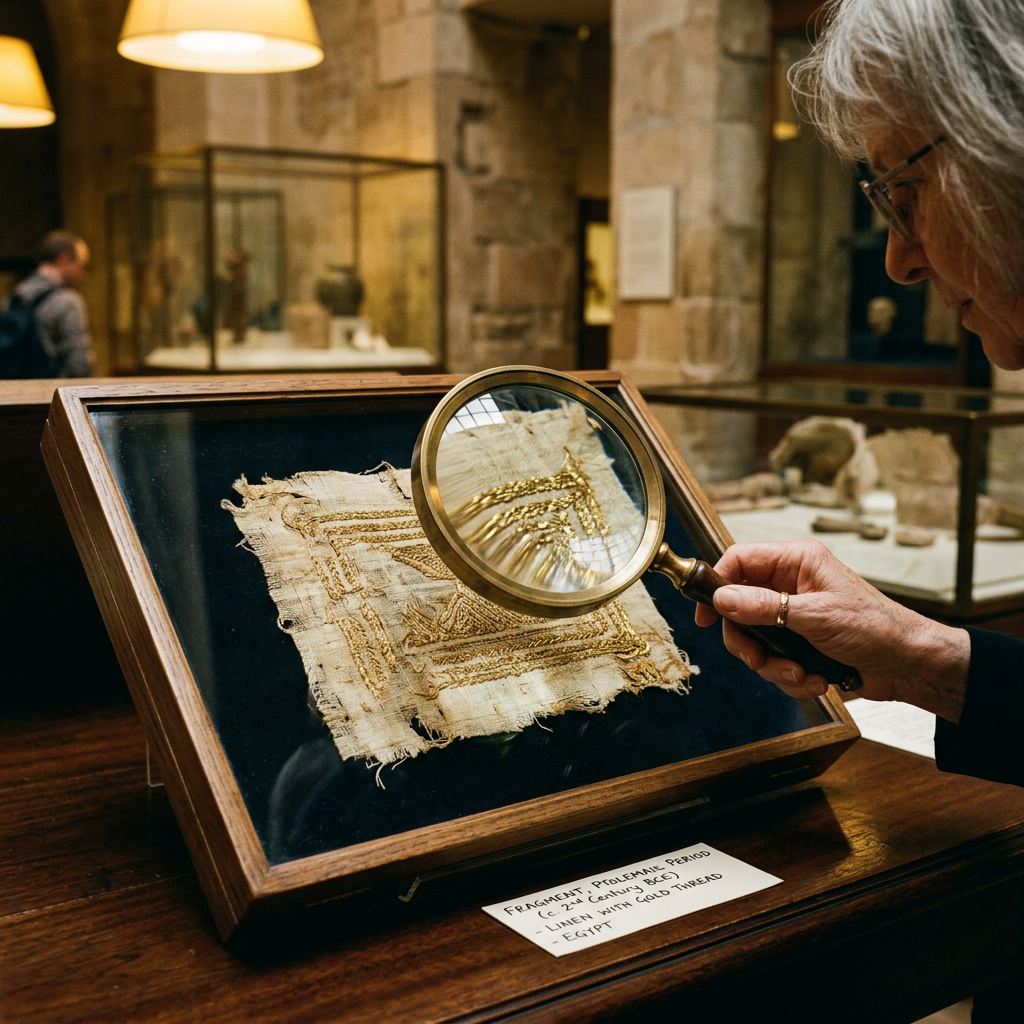
Excavations at the ancient city of Ebla in modern-day Syria have yielded fragments of gold-threaded linen banners that were once used to decorate the city's main gates during the 'Festival of the Silver Grain'. These textiles, preserved by a unique microclimate within a collapsed palace vault, represent some of the earliest examples of complex embroidery used for seasonal state rituals. The banners depict rows of barley being blessed by a moon deity, reflecting the festival's focus on the first harvest of the spring.
Cuneiform tablets found in an adjacent archive provide the logistical ledgers for the event, detailing the distribution of 'silver-hued' grain cakes to the city's inhabitants. The documents describe a processional route that led from the palace to the surrounding fields, where the banners were waved to 'catch the wind' and carry the lunar blessing across the crops. This discovery highlights the sophisticated intersection of agriculture, textile art, and state-sponsored religion in early Bronze Age Mesopotamia.