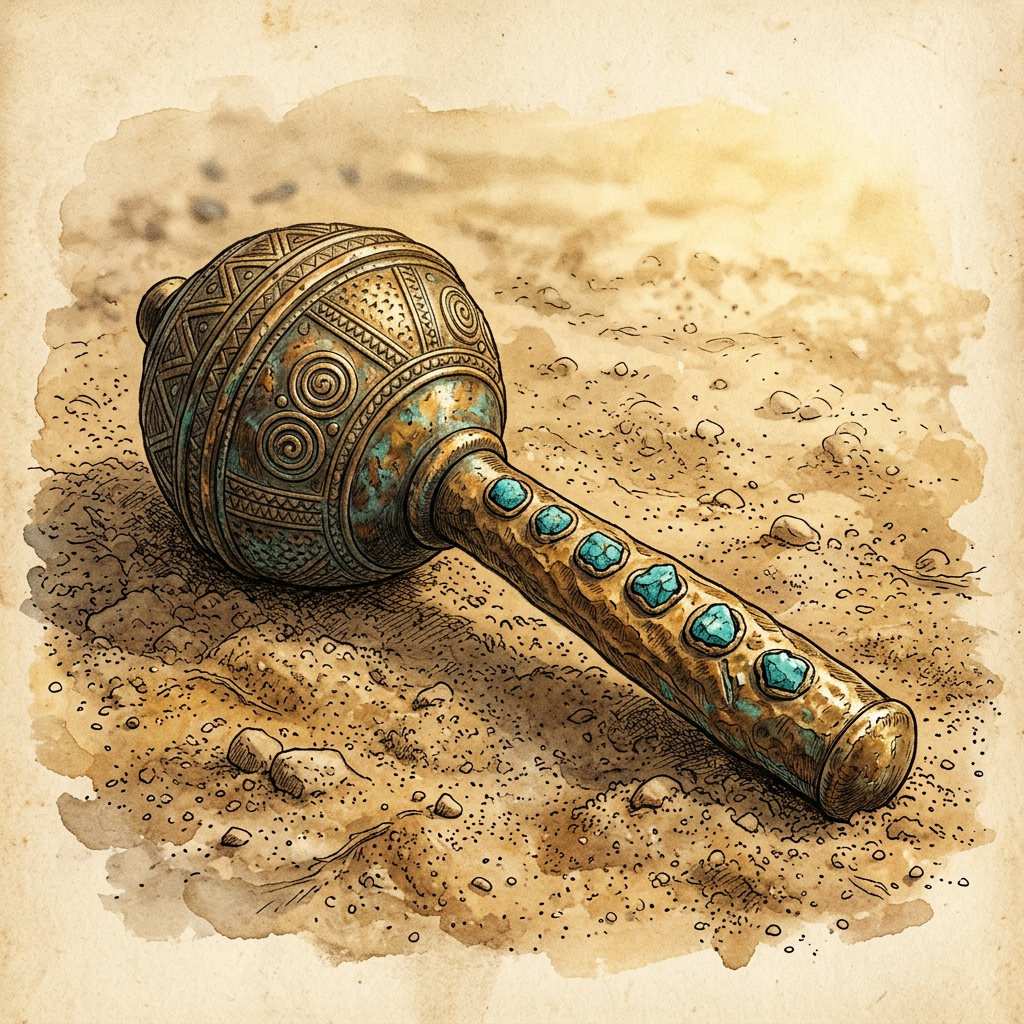
Archaeologists working in the Gulf of Khambhat, Gujarat, have recovered a series of turquoise-studded bronze sistrums (ritual rattles) from a late Harappan layer. These instruments are believed to be the primary tools used in the 'Festival of the River-Song', a seasonal rite celebrating the arrival of the pre-monsoon tides. The turquoise stones, sourced from the far north, indicate that the festival was a major node in a vast trade network that brought luxury materials to the coast for ceremonial use.
The sistrums were used in tandem with large ceramic drums to create a percussive soundscape intended to 'vibrate the water' and encourage the return of fish to the estuaries. The site also yielded evidence of temporary 'sand-altars' where offerings of baked clay figurines were left to be reclaimed by the sea. This discovery reshapes our understanding of post-Indus Valley civilizations, showing that communal maritime festivals remained a vital part of social cohesion even as large urban centers began to decentralize.