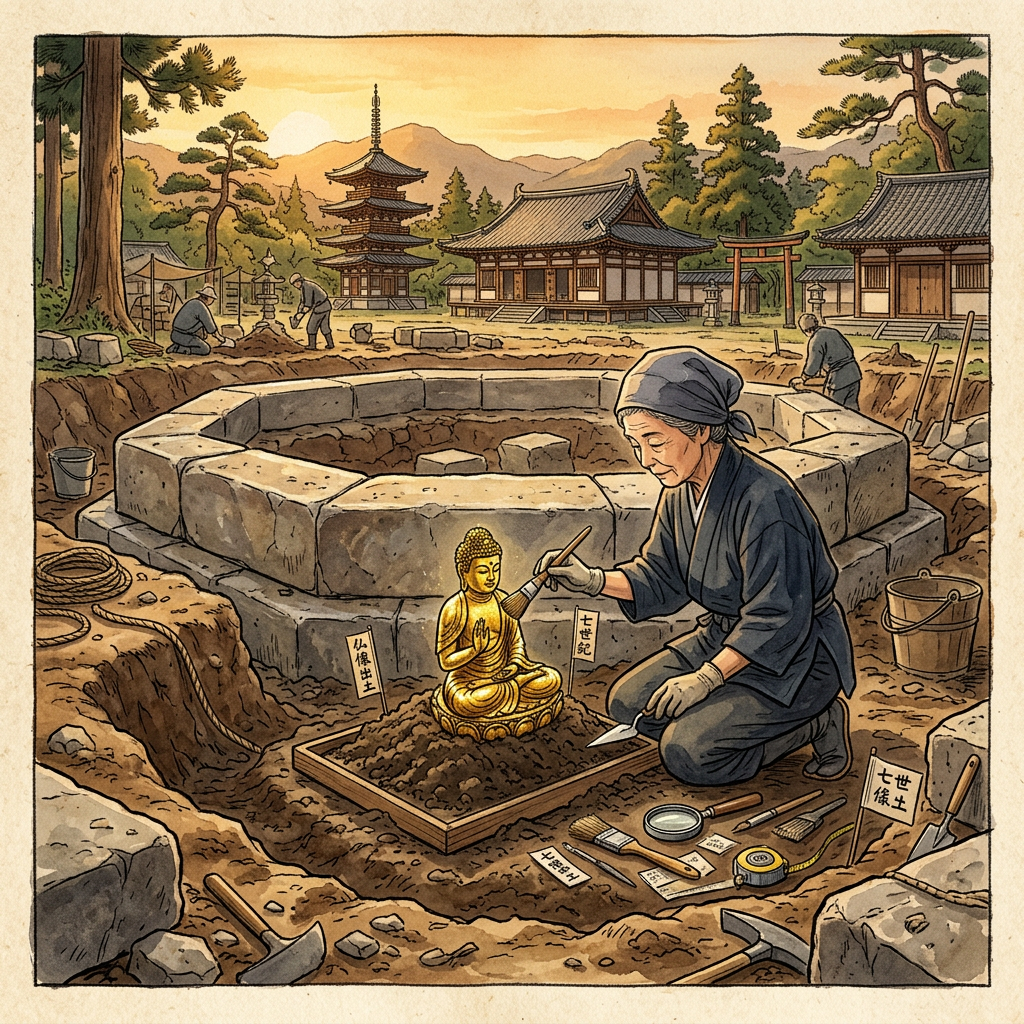
Archaeologists in Nara have announced the discovery of a 7th-century hexagonal temple foundation at a site previously thought to be a secular villa. This Asuka-period structure is the first of its kind found in Japan, featuring a hexagonal floor plan that suggests early influence from diverse mainland Asian Buddhist traditions.
Excavations beneath the central pillar revealed an intact gilded-copper Shaka Triad—a representation of the historical Buddha and two attendants. The find is being hailed as a major breakthrough in Japanese heritage, offering new insights into the rapid evolution of temple geometry during the early days of Buddhism in Japan.