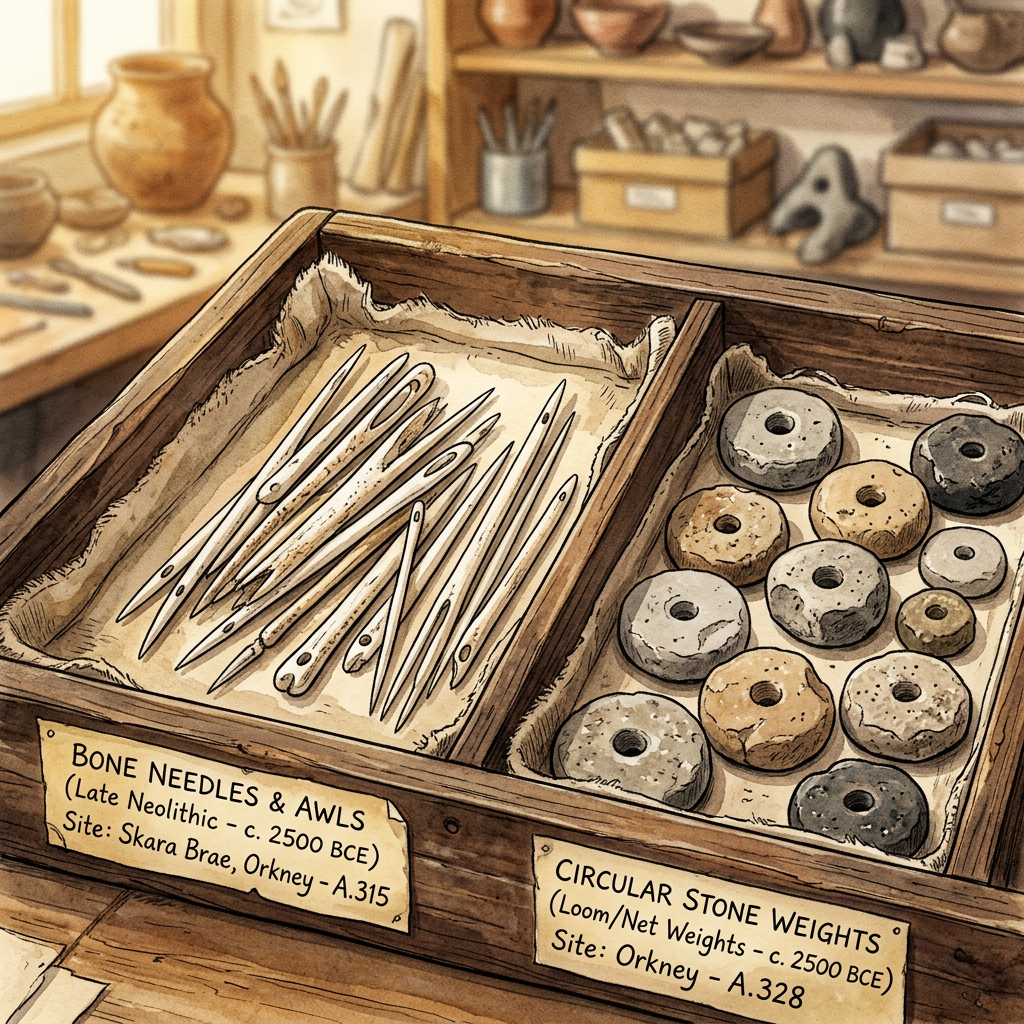
Excavations at a late Neolithic site in China's Shandong Province have uncovered a specialized industrial sector belonging to the Longshan culture. The area contains thousands of highly polished precision bone needles and stone spindle whorls, alongside the earliest evidence of proto-silk weaving frames. This suggests that the Longshan people had developed a standardized textile industry long before the rise of the first imperial dynasties.
The workshop area is divided into specific zones for bone carving, fiber preparation, and weaving, indicating a sophisticated industrial organization. Scientists used microscopic analysis to detect silk fibroin residues on several bone tools, confirming that silk cultivation was already a key component of the regional economy. This discovery provides critical data on the origins of the Silk Road and the technological complexity of Neolithic East Asian societies.