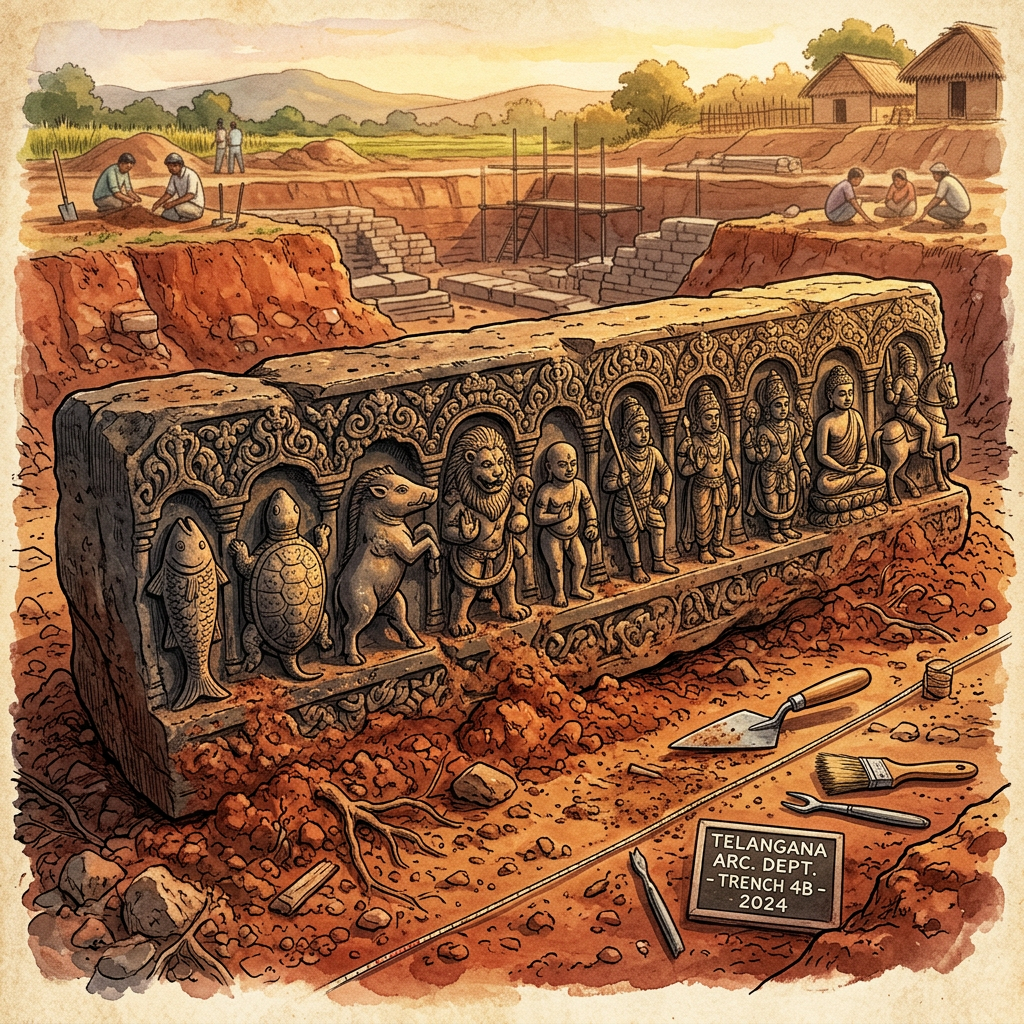
Excavations in the Kamareddy district of Telangana have yielded the remains of a significant 11th-century Vishnu temple from the Kalyani Chalukya era. The discovery was triggered by the accidental finding of a large sandstone lintel by local farmers, which features detailed carvings of the Dashavatara, or the ten incarnations of Vishnu. Experts from the Archaeological Survey of India (ASI) note that the temple’s plan adheres to the complex 'Vesara' architectural style, blending elements of northern and southern Indian traditions.
The excavation has revealed a well-defined garbhagriha (sanctum) and a mandapa supported by pillars featuring floral and geometric motifs. Scholars believe the temple may have been commissioned during the reign of Vikramaditya VI, a period known for its prolific temple-building activities. The presence of a small, attached ritual stepwell indicates that the temple served as a communal spiritual and water-management hub for the medieval agrarian community.