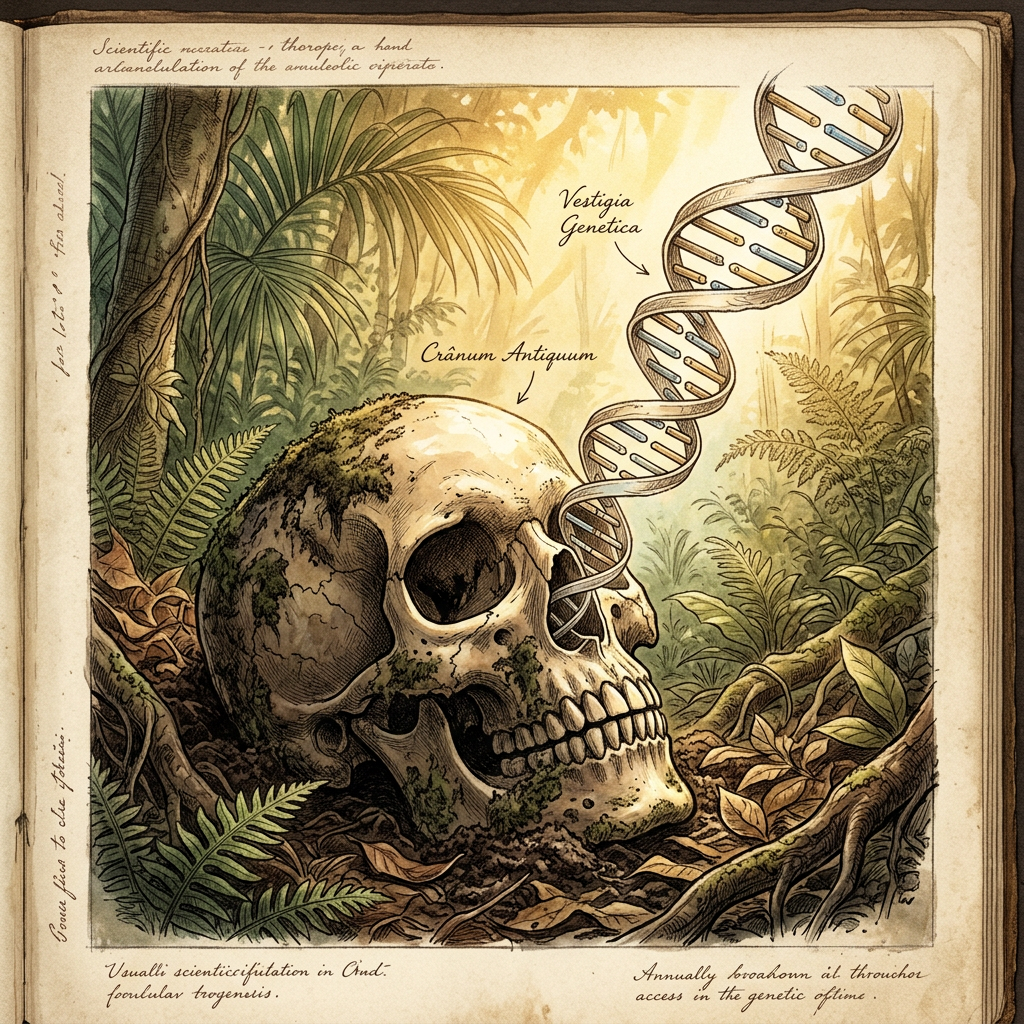
Published in Nature Genetics, a new paleogenomic study has sequenced the DNA of 11,000-year-old human remains discovered in the Cuvette Centrale region of the Congo Basin. The findings identify a distinct genetic signature linked to resilience against endemic arboviral pathogens, providing the earliest known evidence of human evolutionary adaptation to the specific infectious landscape of the African rainforest.
The study reveals a significant population pulse during the early Holocene, where hunter-gatherer groups developed specialized immune responses to survive in high-biodiversity tropical ecosystems. This research not only sheds light on the deep history of human health in Central Africa but also provides a genetic baseline for understanding how ancient populations navigated the challenges of endemic diseases. The analysis confirms a long period of genetic continuity in the region prior to the expansion of later agricultural groups.