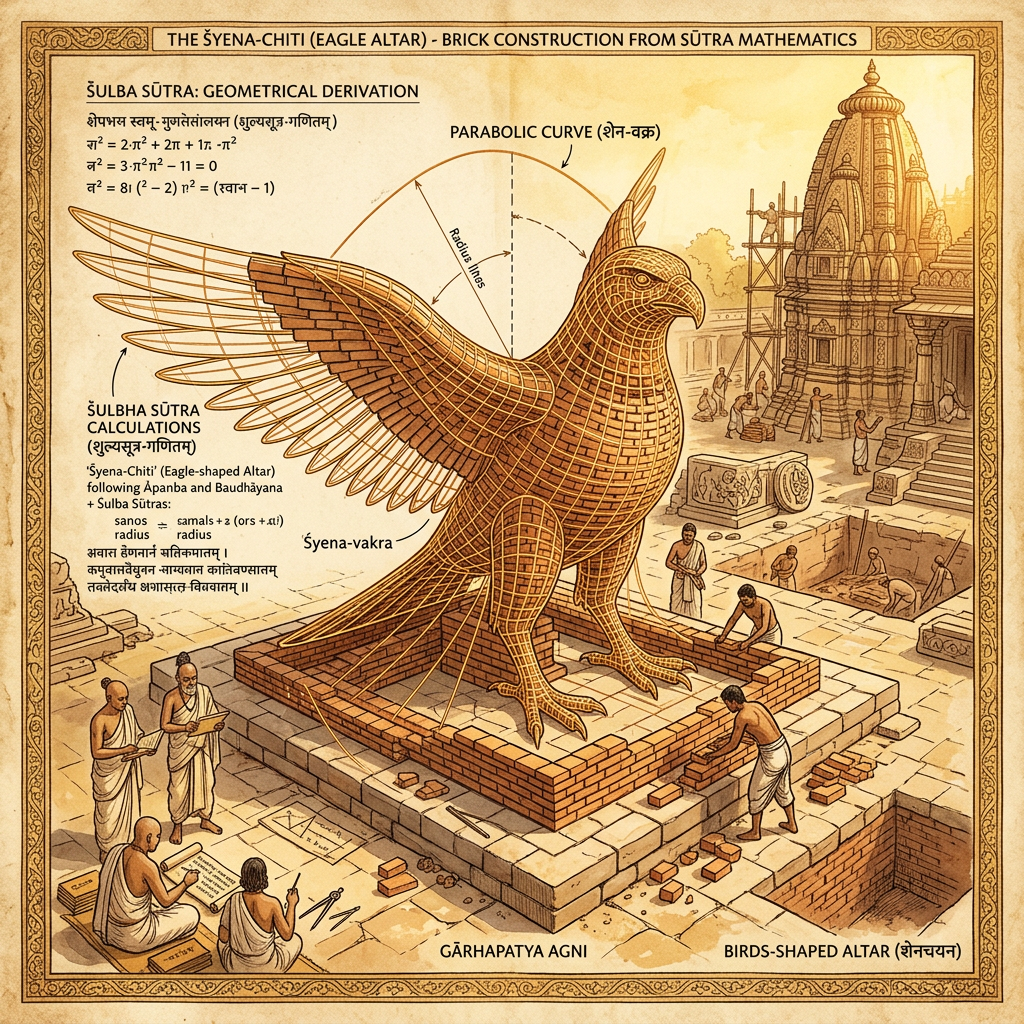
Computational researchers at the Vedic Science Foundation have published a new analysis of 1st millennium BCE Vadhula Shrauta Sutra fragments in Ancient Mathematics Review. The study reveals that the ritual layout instructions for the construction of complex brick altars utilized advanced recursive algorithms for the geometric construction of non-orthogonal parabolic arcs.
Unlike the simpler linear geometries found in many contemporary civilizations, these Sanskrit texts provide a step-by-step mathematical logic for approximating complex curves using a series of interlocking geometric shapes. The research demonstrates that Vedic practitioners were modeling structural stress and symmetry to ensure the stability of multi-layered foundations. This study confirms that ritual architecture in ancient India served as a primary venue for the development of high-level geometric theory and precision engineering standards.