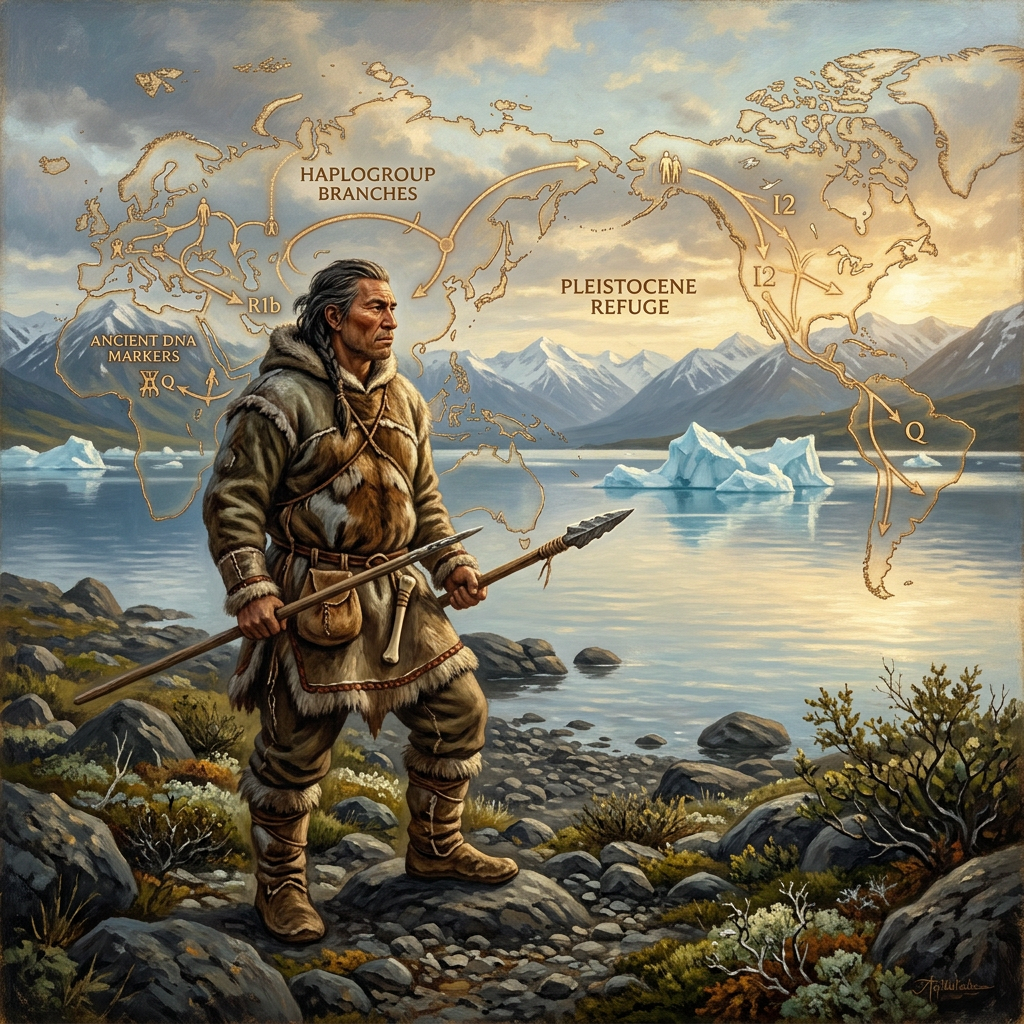
Research published in the Journal of Human Evolution details the genomic analysis of 12,000-year-old remains found on the shores of Lake Onega. The study identifies a unique post-glacial migration pulse characterized by a genetic adaptation to cold-induced hypoxia. This suggests that these early North Eurasian foragers possessed specialized physiological traits that allowed them to survive in the oxygen-thin, frigid environments left by retreating glaciers.
The genetic data reveals that this population was part of a previously unknown 'ghost lineage' that contributed significantly to the ancestry of later hunter-gatherer cultures in the Baltic and Scandinavian regions. The findings rewrite the early migration history of Northern Europe, showing that specialized human groups were successfully colonizing sub-arctic lake systems immediately following the Last Glacial Maximum, much earlier than previously confirmed by archaeological evidence alone.