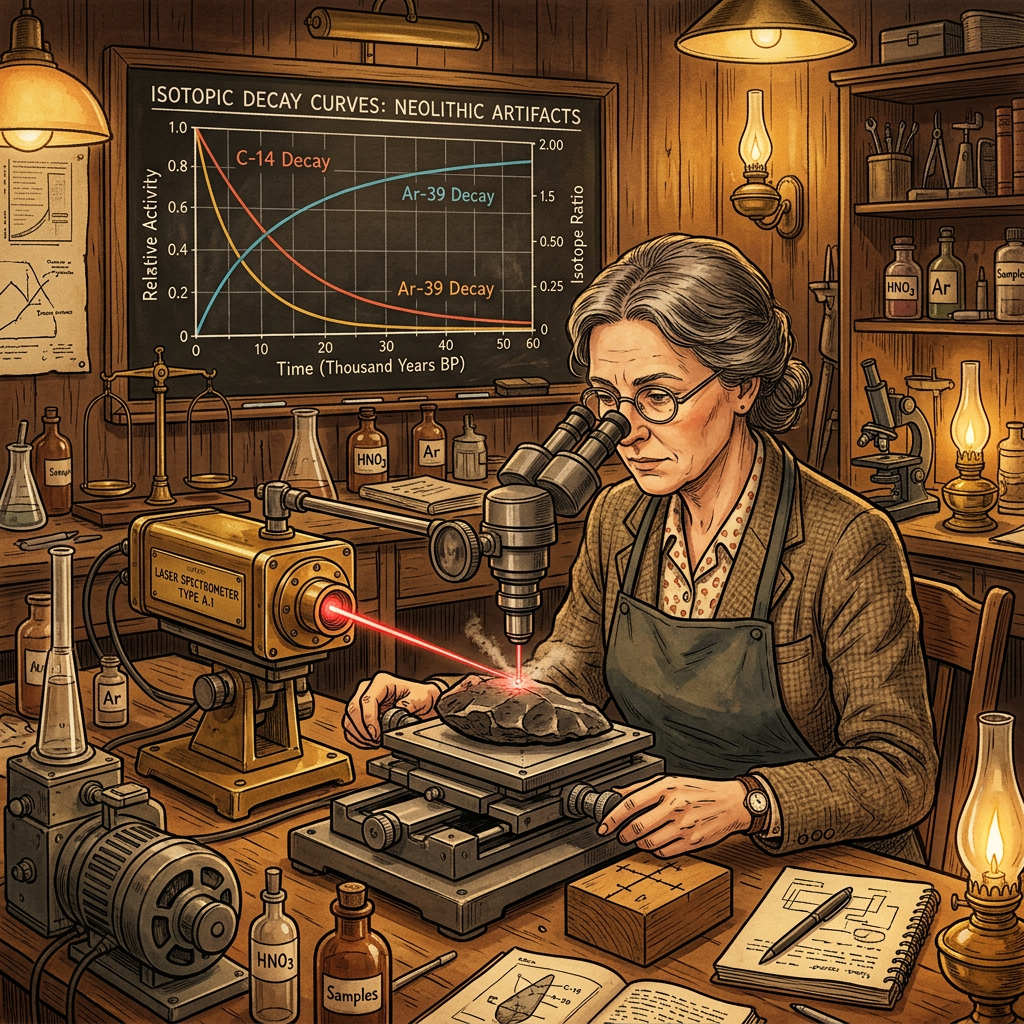
A new study in Archaeometry introduces Europium-152 Isotopic Chronometry, a refined dating methodology that offers unprecedented resolution for early Neolithic sites. The research team applied this technique to 'Hoabinhian' settlements in the Salween River Valley, refining the chronology of these early hunter-gatherer sites to 9500 BCE with sub-decadal precision.
This breakthrough allows archaeologists to map the rapid transition from nomadic foraging to semi-sedentary riverine living with much greater accuracy. By measuring the radioactive decay of Europium-152 within calcified remains and stone tools, the researchers were able to solve long-standing disputes regarding the timeline of human dispersal in Southeast Asia. The new data suggests that the adoption of aquatic resource management occurred much earlier than previously estimated, driven by stabilizing post-glacial climates.