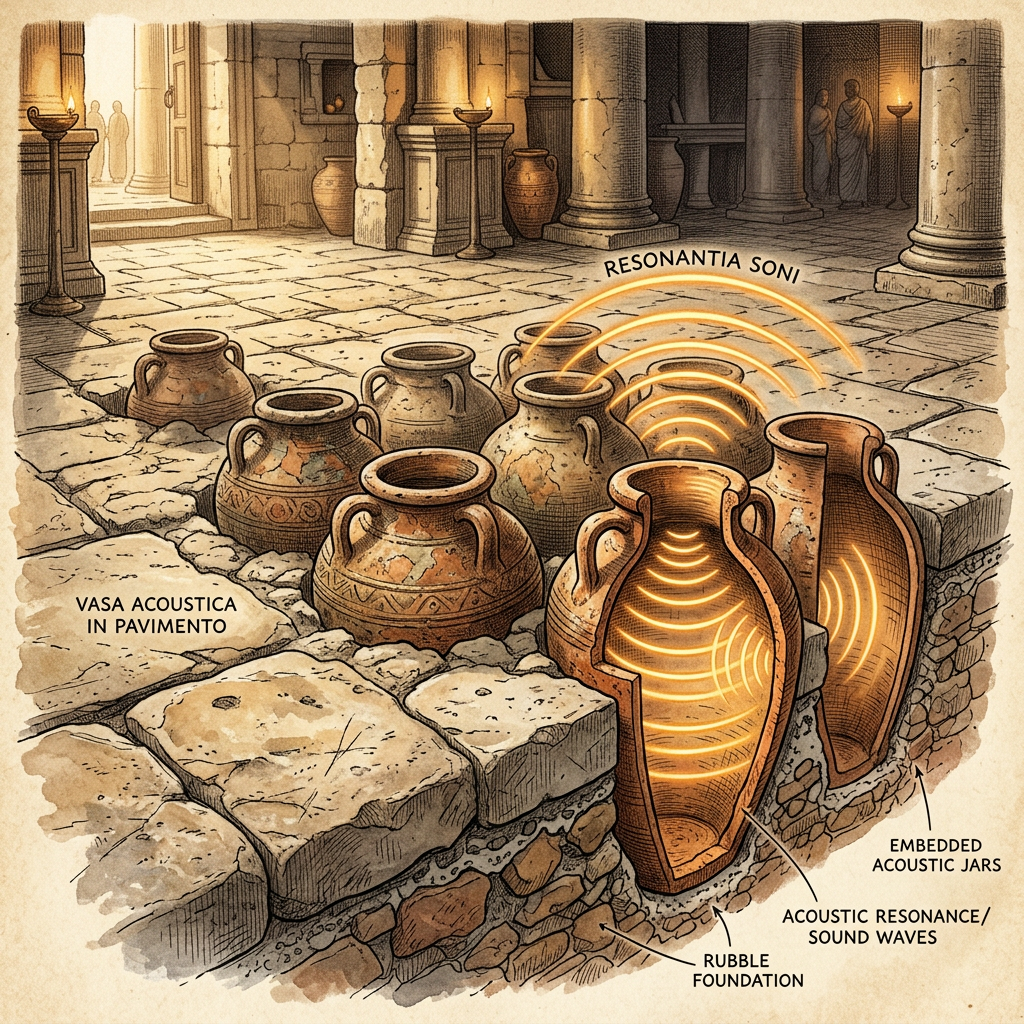
Archeologists working on the structural restoration of a neglected 11th-century Solanki-era temple in Gujarat's Patan district have made a remarkable discovery. While reinforcing the sub-flooring of the Sabhamandapa (assembly hall), the team uncovered a series of specialized acoustic-ceramic jars embedded within the masonry. These jars, positioned with mathematical precision, were likely designed to amplify the resonance of Vedic chants and ritual bells during religious ceremonies.
The excavation revealed that these ceramic vessels were filled with a specific mixture of river sand and mineral charcoal, acting as primitive but highly effective sound resonators. This finding provides new insights into the advanced architectural acoustics employed by medieval Indian engineers, who integrated auditory experience directly into the stone anatomy of sacred structures. The project, led by the State Department of Archaeology, aims to restore the temple’s original sonic properties alongside its physical form.