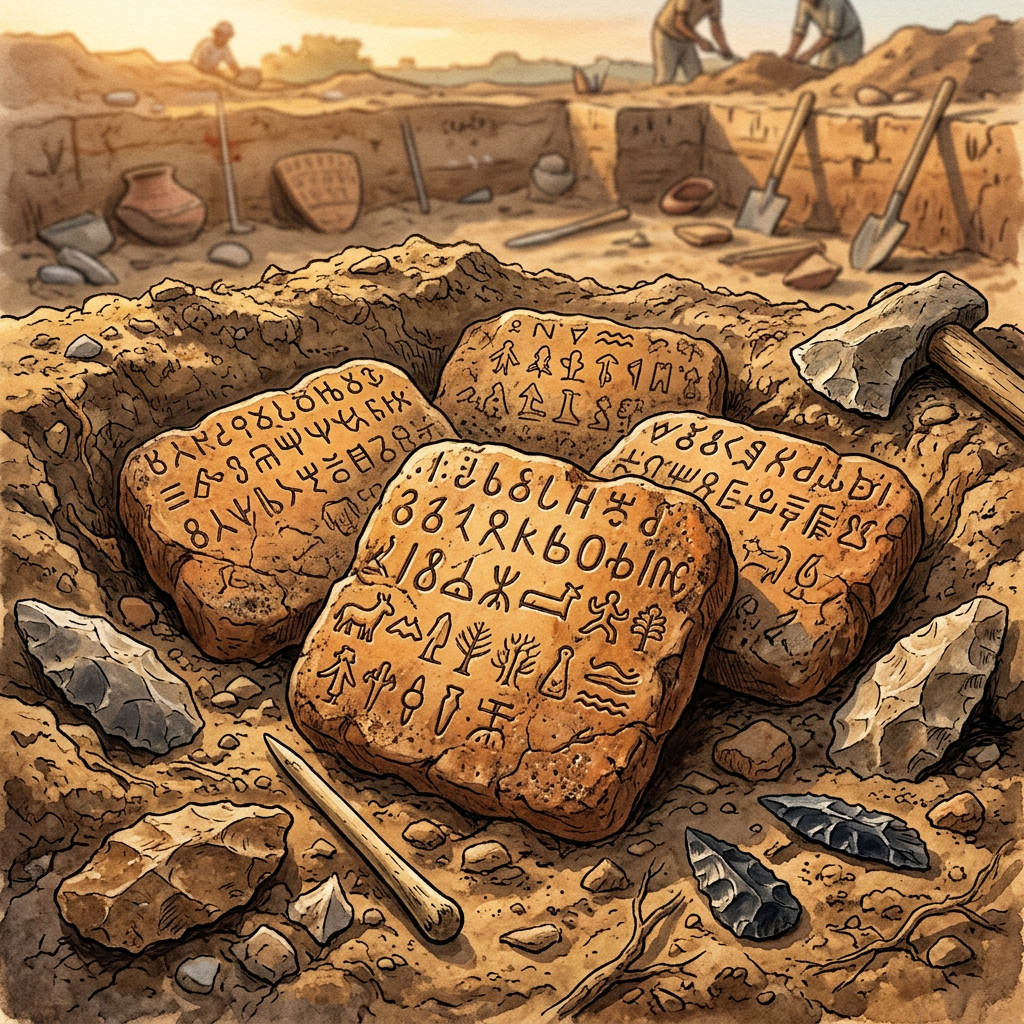
Excavations at a pre-Kushan site in the Kabul Valley have unearthed a series of 6th-century BCE clay tablets inscribed with the Adrishta-Yukti, or the 'Logic of the Unseen.' These tablets represent a formative stage of Gandharan philosophical thought, blending early Vedic realism with local analytical traditions to explain how invisible causal forces (Adrishta) govern the physical world.
The text proposes a proto-atomic theory where 'unseen qualities' reside within the gaps of matter, driving the cycles of birth and decay. Scholarly analysis suggests that these tablets may be the missing link between the early Samkhya-Vaisheshika schools and the sophisticated logical systems that later flourished in the region's great universities like Taxila and Bamiyan.