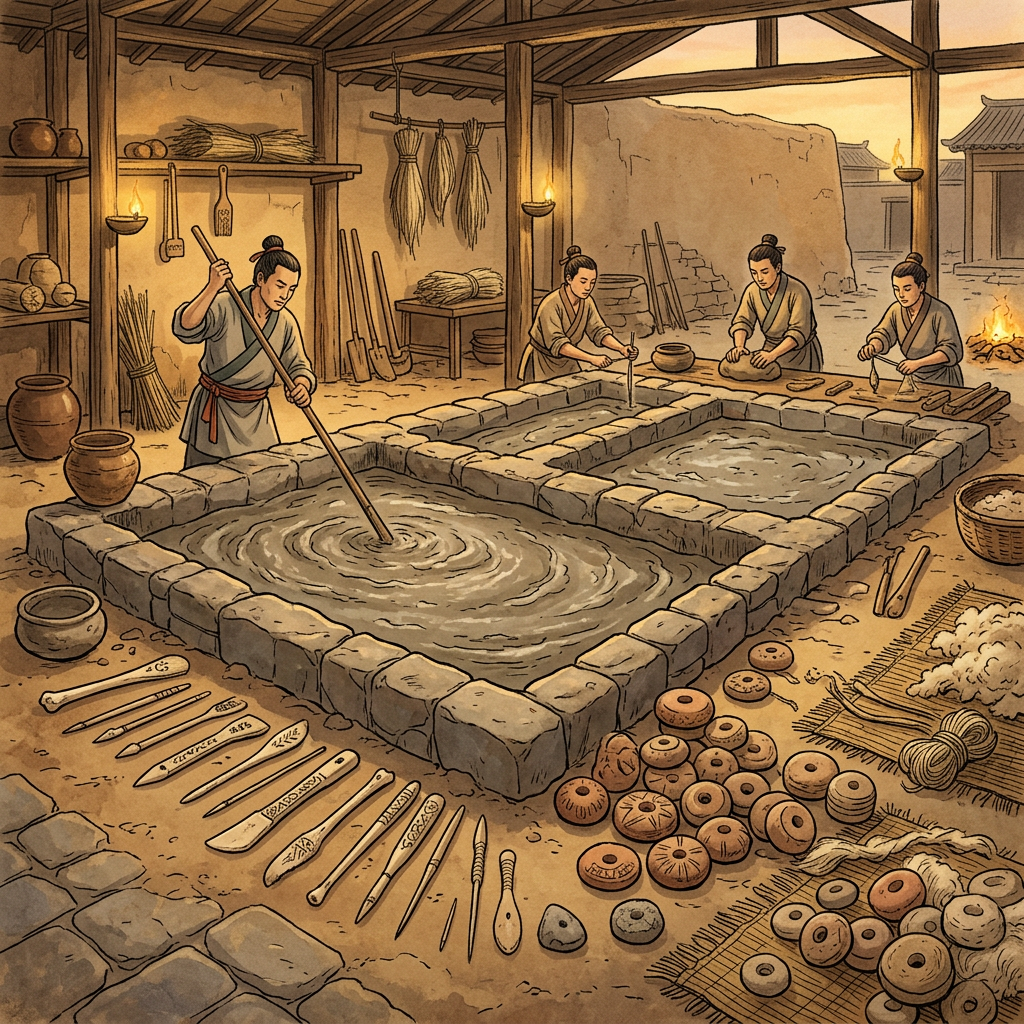
Archaeologists in China's Zhejiang Province have excavated a major industrial wing belonging to the Liangzhu Culture, identified as a "Hemp-Fiber Processing Factory." The discovery predates the widespread use of silk in the region and suggests that Liangzhu society had achieved industrial-scale textile production for its non-elite population. The site features a series of intact stone retting-vats used for soaking hemp stalks to separate the fibers.
Alongside the vats, researchers found a large cache of bone scrapers and spinning whorls, some of which are inscribed with early Liangzhu totemic symbols. The layout of the factory indicates a highly organized division of labor, with separate areas for soaking, drying, and spinning. This find provides a rare look at the everyday industries that supported one of China's most complex Neolithic civilizations.