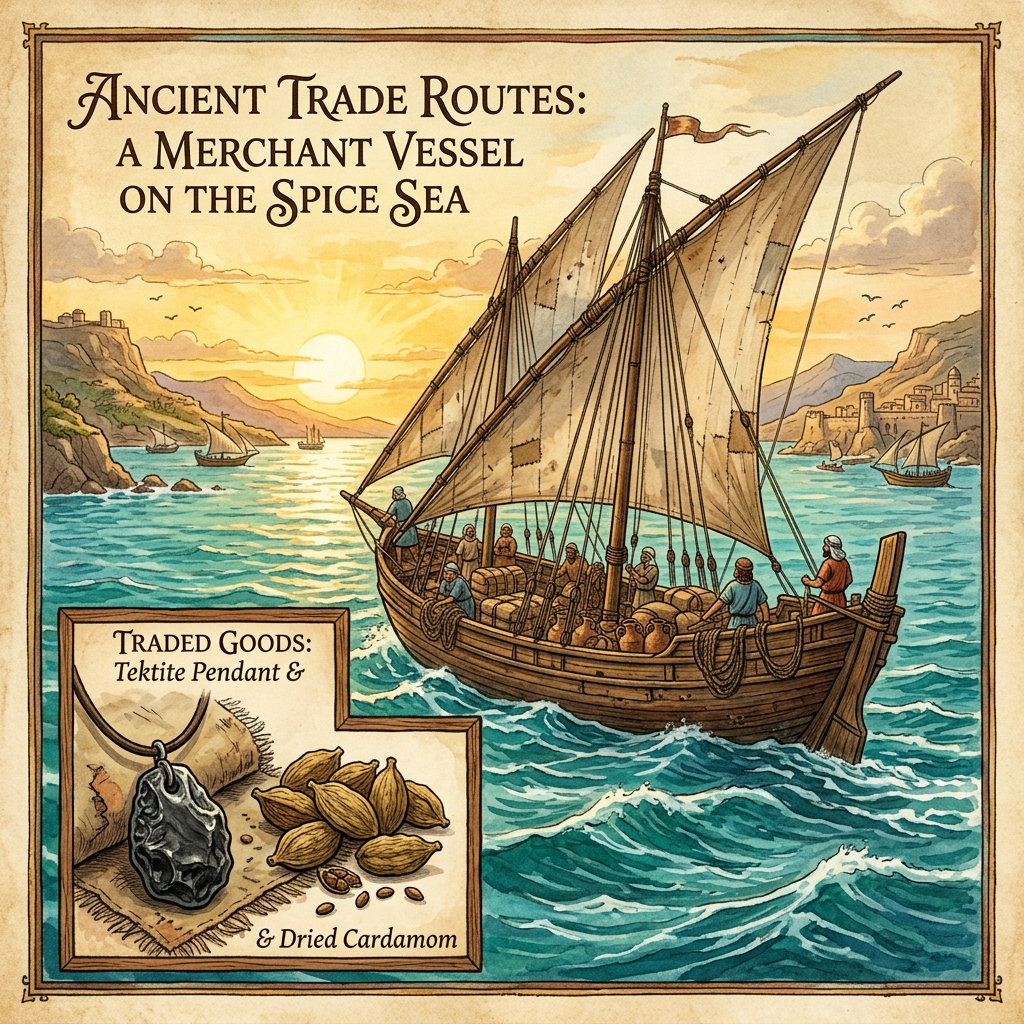
Marine archaeologists and geochemists have identified a previously unknown maritime trade network linking the Mekong Delta of Vietnam to the Malabar Coast of India. By analyzing tektite glass ornaments and spice residues found in submerged settlements, the team established that a complex luxury exchange existed as early as 500 BCE, pre-dating established records of the Maritime Silk Road.
The study reveals that cardamom and other aromatic resins were traded for high-status tektite jewelry, which was prized for its celestial origins. This 'Tektite and Cardamom Seaway' suggests that ancient maritime civilizations possessed significantly more advanced navigational capabilities and cross-cultural economic ties than previously understood, utilizing seasonal monsoon winds to traverse thousands of miles of open water.